
Chevy Scores Big with Centennial Badge & SEMA Success
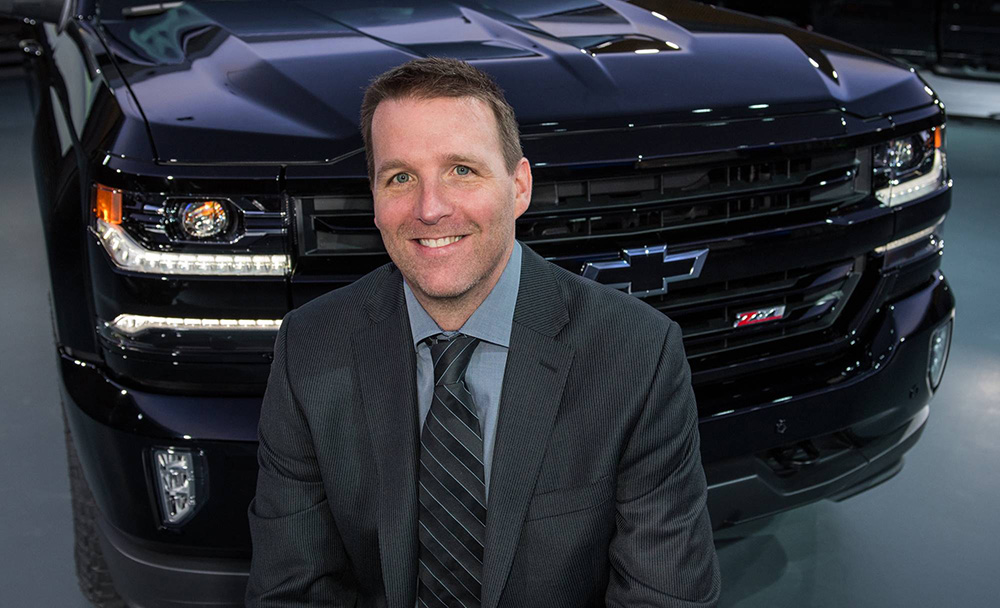
New heritage emblem & buzz-worthy C10 celebrate Bowtie’s iconic aesthetic. We explore the refreshes with Director of Design, Rich Sheer.
Chevrolet Forum recently chatted with Rich Sheer, Chevrolet Trucks Chief Exterior Designer. He talked to us about the 100th anniversary bowtie, his truck heritage, and how amazing the customized 1967 Chevy C-10 turned out.

Chevrolet Forum: What’s new in Chevy truck design? The new badge looks really great.
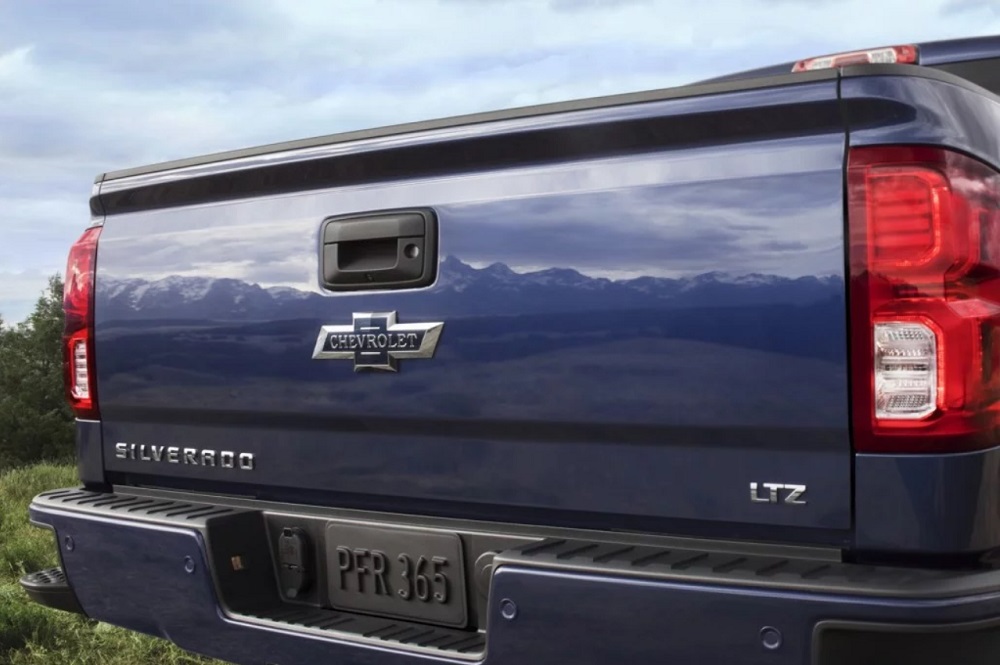
RICH SHEER: Thanks. Yes, absolutely. The 100th anniversary of the heritage badge is a big deal. It is a replacement for the front and rear bowtie and, of course, the badges are on the door. We’re really pleased with how they came out.
We were inspired by the early truck designs from the 1980s, and even more specifically by the Suburban; if I can recall correctly, a 1936 Suburban. We really love those classic trucks; just beautiful attention to detail.
We thought, what better way to show off the 100th anniversary than putting Chevrolet inside the bowtie and using that dark blue? In our history, we’ve had bowties that have gone from blue to gold to red. We’ve also had black, and we really like the very dark blue that looks black. It’s very sophisticated. I just loved the way it came out. I think the customer is going to love it.
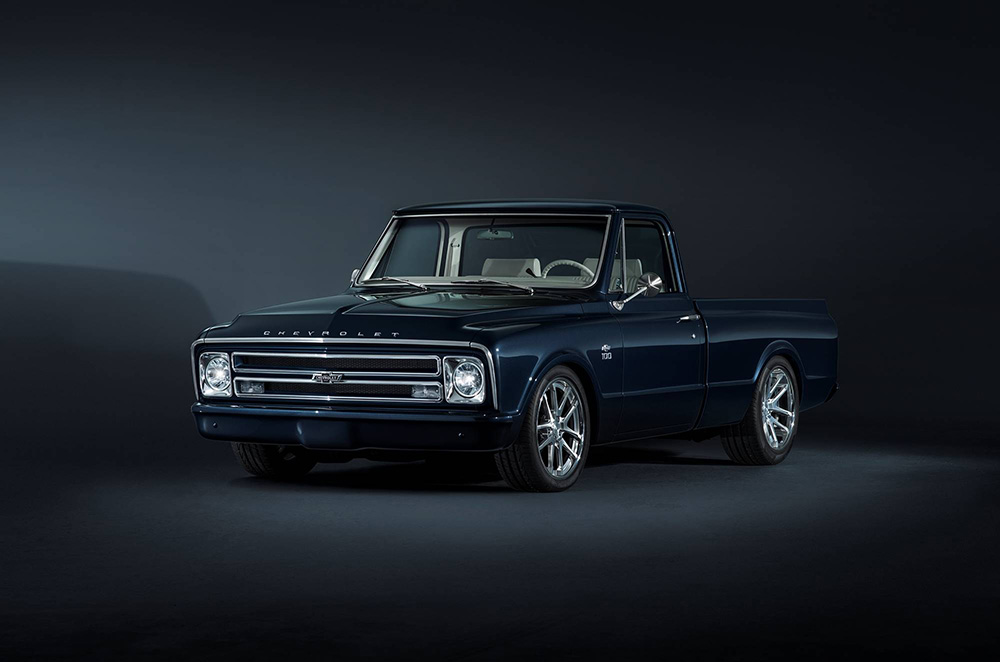
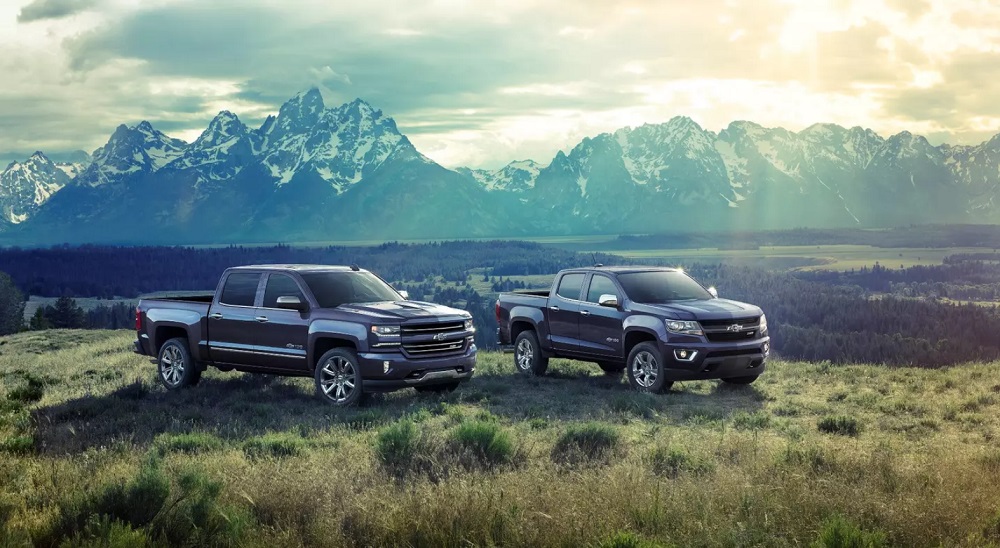
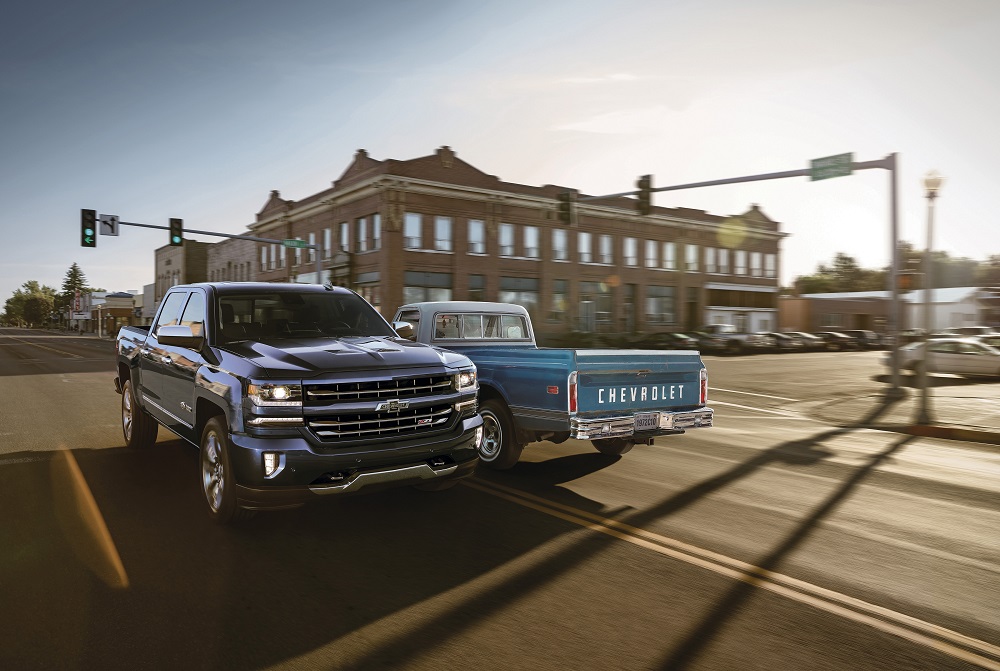
The 2018 Colorado and Silverado Centennial Editions are pretty special. However, the 1967 C10 truck that you will be showcasing at SEMA 2017 is just spectacular. Did you have a big role in picking the model?
Well, actually, I did. But I can’t take all the credit. One of my colleagues, Todd Parker, who’s in charge of the specialty builds in design, it was really his call.
That Chevy ‘67 C10 was special to me, and I think he kind of felt the same way. It was really a perfect storm of finding that great truck and then pulling it all together with the anniversary color and the badges.
Yeah, the Silverado and the Colorado Centennial Editions are great, but that ’67 is spectacular.
Let’s talk about the design process. How do you get started on an actual build?
It really starts with a sketch. I’ve got a team of fantastic designers. I’m glad they’re much younger than me. They’re doing it on much newer, cooler programs than I would be, but I’m certainly glad to lead them. They work on all the new concepts. That’s where we start.
We also have many customer touch points, where we’ll go out and research sketches of early models. We’ll ask for likes and dislikes. It really is all about trying to get into the minds of the customers.
‘I learned to drive in a ’77 Blazer with a three-speed, a big V-8 holley on it. Hard to drive and hard to get into first gear, but I loved the truck, and loved working on them.’
Then, we start working on one-third scale models. We’ll do somewhere between six and a dozen. It’s a nice way to take the initial sketch and turn it into 3D. We do them in scale so that we can do many of them and get a lot of ideas out there. Along the way, we’ll have some leadership reviews.
We try to narrow them to maybe the top three. We’ll take at least two and do full-size clay models. Then they kind of develop from there as we begin to get our engineering teams engaged. And we start working on packaging challenges. Then, we start looking at technologies and how we’re going to integrate them. A lot of times the technologies will drive the sketching. Sometimes the sketching will drive the technology.
It really is a fun, creative business. You’re not exactly sure where the end will be, and that’s what we love so much. You kind of get on a journey with the goal to do something great, and you really hope that you get there.
You have a bit of history with Chevy trucks. You grew up with them, correct?
Sure did. My dad had several trucks. I can’t tell you how many Chevy trucks, but we had a backyard full of them. He used Chevy as his work truck. We had a couple of nice trucks that he really loved, like an 1987 Blazer that really turned him into Dale Earnhardt. I learned to drive in a ’77 with a three-speed, a big V-8 holley on it. Hard to drive and hard to get into first gear, but I loved the truck, and loved working on them. They were always part of our lives, and kind of like one of the members of the family.
You then took that love of trucks and became an exterior designer.
I really am lucky in that regard. When I was in high school, I started to really have an appreciation for design. I loved cars. My dad and I loved stock car racing….We loved going to those races. They’re all powered by Chevrolet motors. Somehow Chevrolet was always just the right thing for us. Somewhere along the way, I discovered there was a thing called “car design.” After I learned I could blend my passion for cars and art into a career that actually exists, it was just a shock.
The light bulb went on and then after that it was just an absolute. I got great help from an art teacher in high school. I found my way to art school, and then right into General Motors after graduation.
When did you join the truck-design team?
I joined the truck team about three-and-a-half years ago. Since that time, one of the first fun projects was working on the ZR2. We finished up that show-car that went out to Los Angeles. It was great to have the leaders of the company really challenge us designers, and our engineering colleagues, asking how quickly we can get this market. That was a really nice way to get introduced to the Chevy Truck Studio. Ever since, I’ve had a blast, and I’m really excited about the future.