
Chevrolet ZR2 Bison: It’s All In the Family
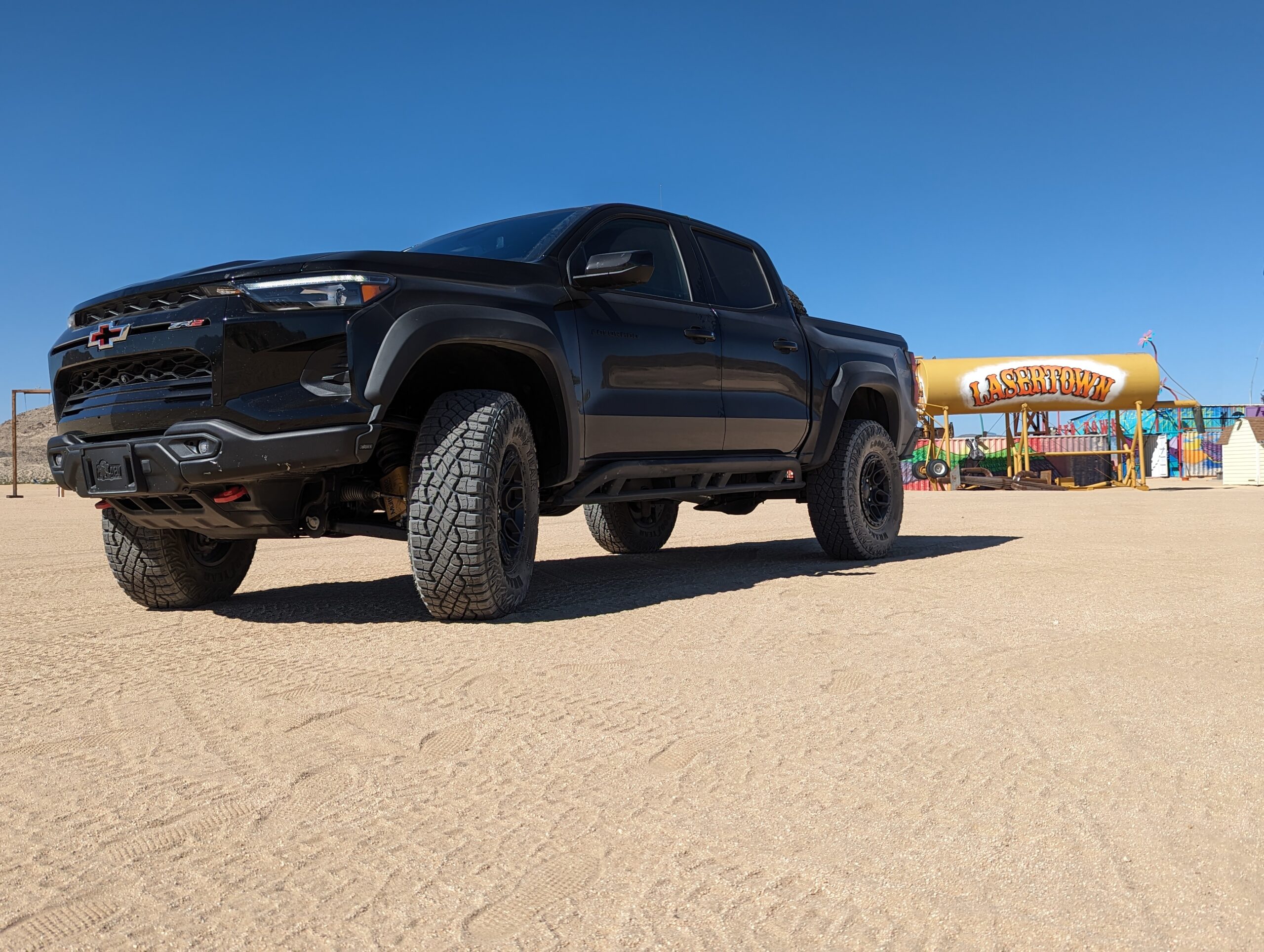
Chevrolet Performance yet again finds the sweet spot between form and function on the new ZR2 Bison trim with the help of AEV.
When Chevrolet does off-road, the very first thought that always comes to mind is the ZR2 trim. The Z71 and Trail Boss trims also deserve accolades, but if you want the penultimate experience, you’re going to want that “other Z.” But if you want the cream-of-the-crop? Enter the ZR2 Bison.
Chevrolet Forum recently went on a trip to Lazertown (privately-owned land in the Johnson Valley OHV in San Bernardino County, California) to drive both the Silverado 2500HD and the Colorado ZR2 Bison variants.

Both versions of these trucks are not just Chevrolet’s flagship vehicles for their full-sized and mid-sized segments. They’re industry leaders, too. The Silverado 2500HD is the apex example of a full-sized, utility hauler and off-roader.
But the fully-loaded Colorado ZR2 Bison is a clear force that neither Dodge nor Ford have a “serious” answer to. And here’s why.

Factory ‘Freak’
Once again, Chevrolet tapped American Expedition Vehicles to add their touches to the ZR2 family for 2024. AEV is well-known for their robust aftermarket fortifications; protective plating, bulletproof ball joints and knuckles, suspension, you name it.
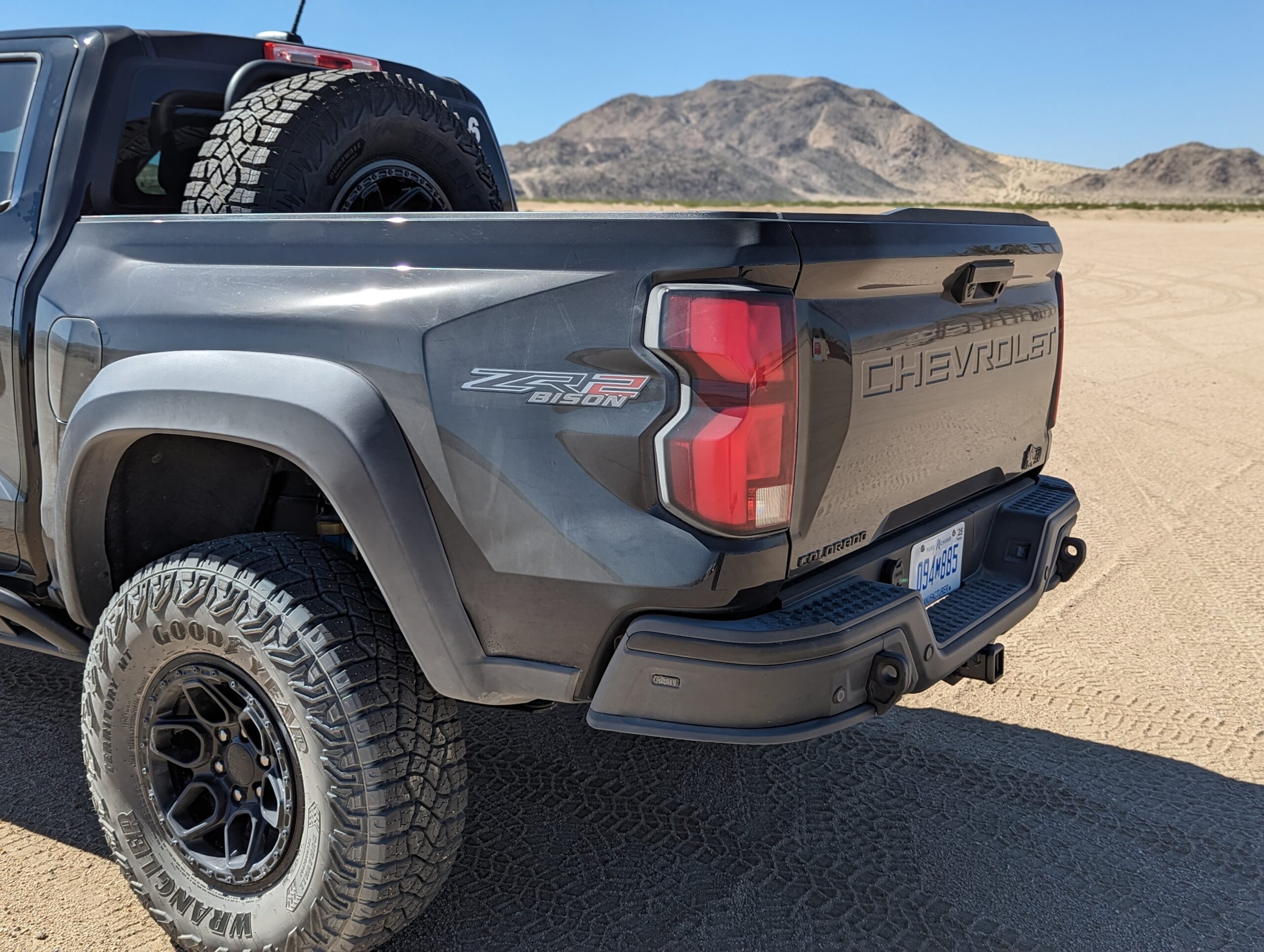
The 2024 Chevrolet Colorado ZR2 Bison has 35-inch wheels, 1.5-inch lift and, thanks to American Expedition Vehicles, boron-steel skid plates all around, rocker panels and fender flares. All from the factory.
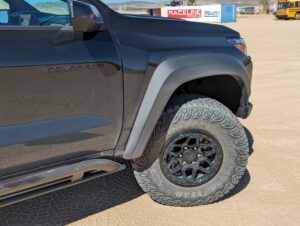
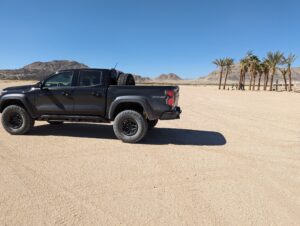
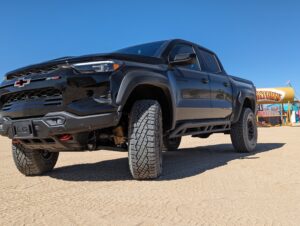
This is obviously significant, since it’s the first time (at least in my recent memory) that a mid-size truck came standard with such beefy, bead-locked wheels. More importantly, however, is that this truck absolutely redefines what a mid-size can do on- and off-road.

And for Chevy, these factory mods follow a status quo for the company: listening to what customers actually want on their vehicles, and simply giving it to them. With a five-year/60,000-mile warranty to boot.
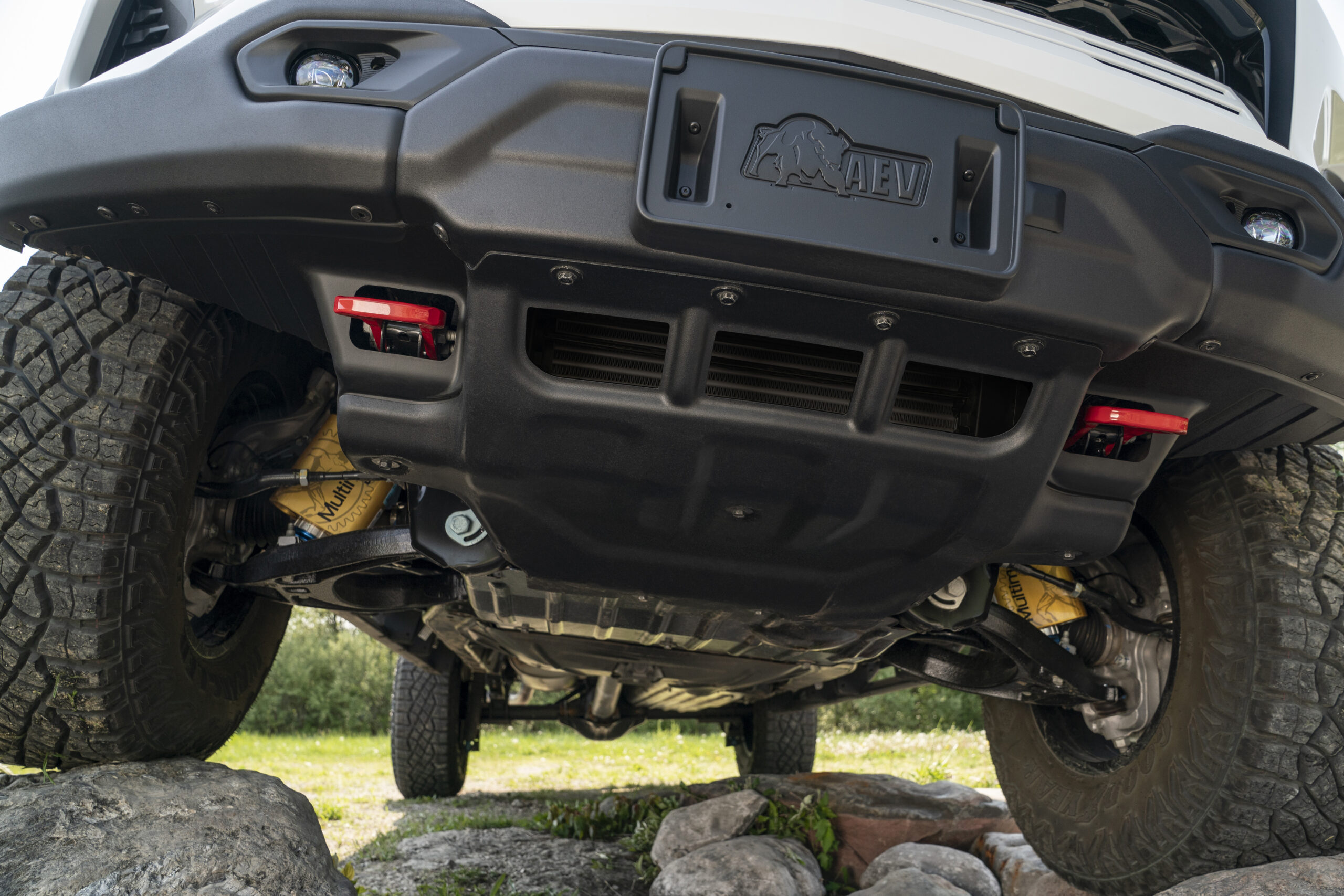
Photo: Chevrolet
Best of Both Worlds
With AEV’s rock-solid parts catalogue and Chevy’s versatile engineering, the ZR2 Bison trim offers plenty of cabin room, a beautifully-sharp wide track, and of course, tons of utility and safety. As you can see, the AEV skid plates surround nearly every underpart of the truck. The exposed red tow hooks also look particularly nice, and the front bumper is ready for your favorite winch.
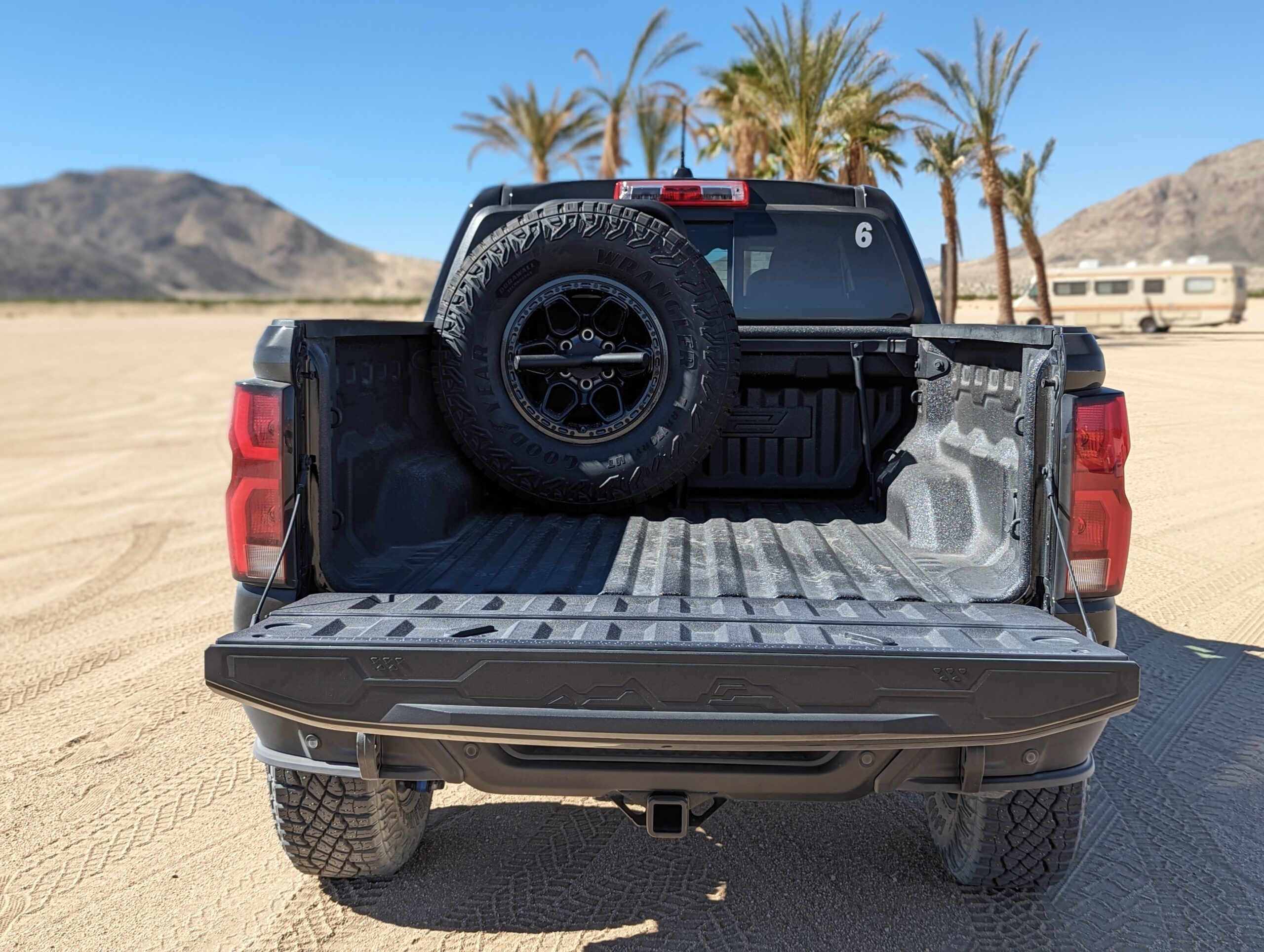
AEV also did the “raptor-lined” beds for both vehicles, however only the Colorado comes with the race wheel inspired spare wheel holder. A curious decision, as the Silverado would also benefit from this feature. However, rear visibility on the Colorado with a wheel attached does affect rear driver side visibility (more on this later.)
Despite this, both the Colorado and the Silverado 2500HD still come with loads of cameras, including a 360-camera, rear and undercarriage implementations, just like the Z71 trim. So you’ll never truly have any actual visibility issues.
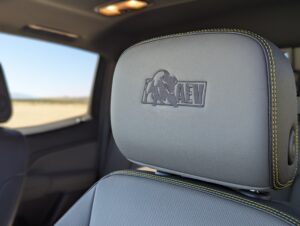
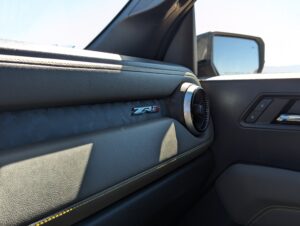
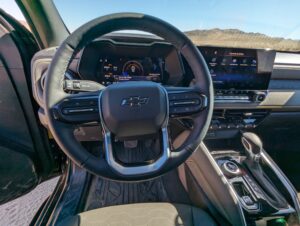
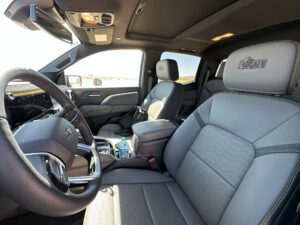
Aside from that, the interior is roughly the same as the Colorado and Silverado Z71 offerings. Save for a few touchpoints here and there and the AEV stitching and badging.
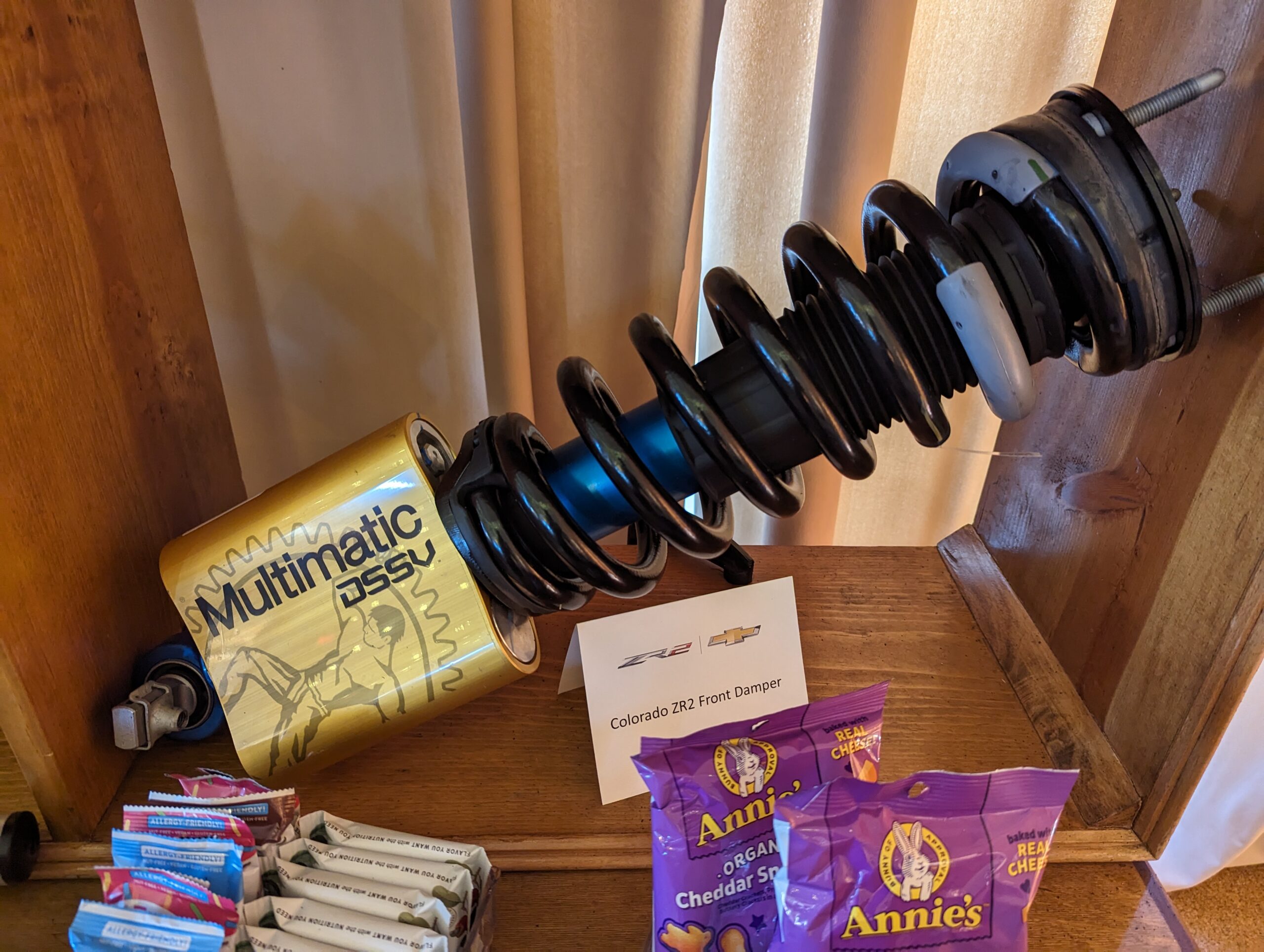
Revamped Mulitmatic DSSV
Moving on the utility side of things, the suspension on the ZR2 has been revamped, retuned and bolstered. However, compared to the Silverado, the Colorado also comes with exclusive jounce dampers.
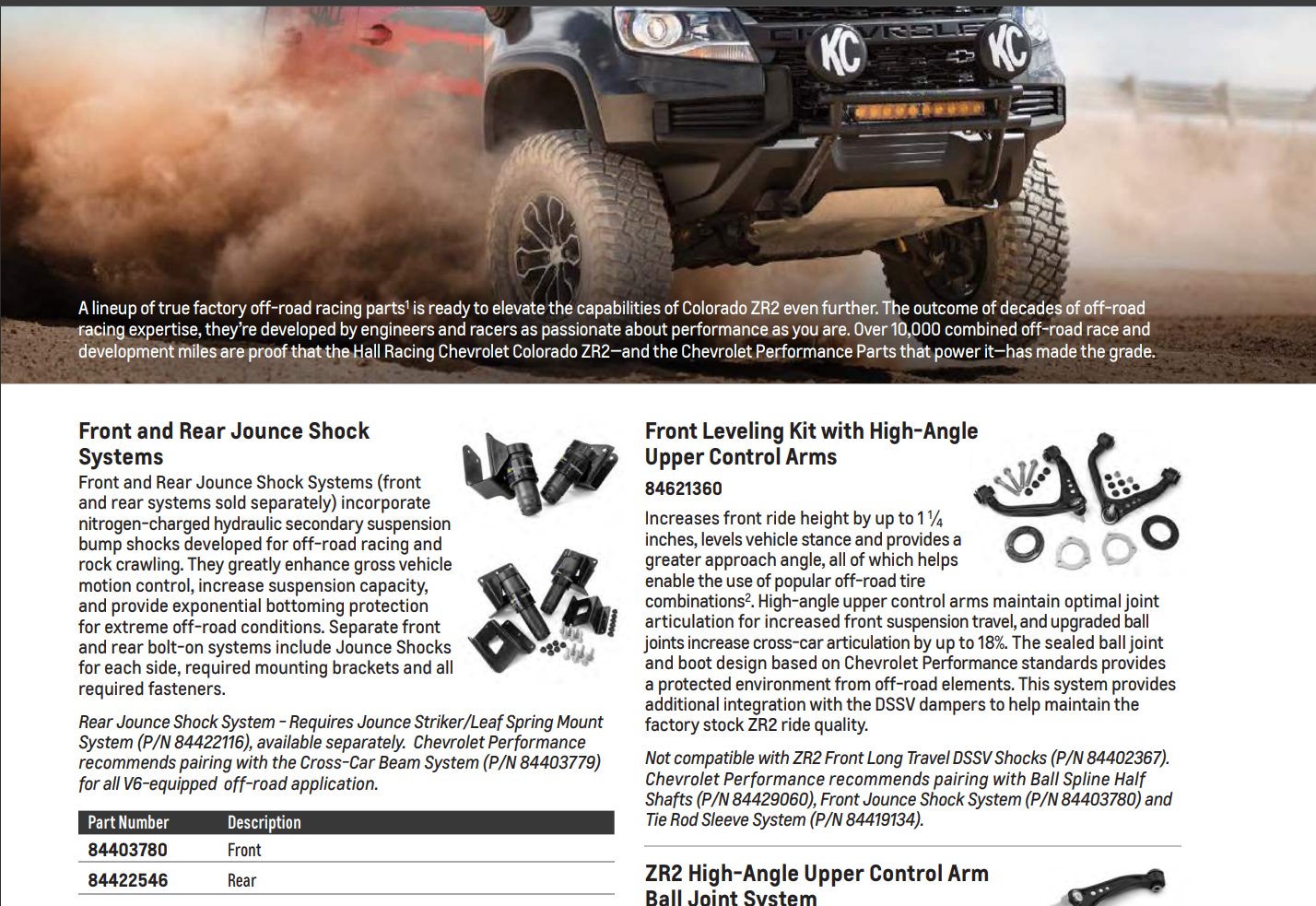
The dampers were part of the 2022 performance catalogue, but in good form, Chevrolet included these for enthusiasts as an OEM part in ZR2 Bison for 2024.
“We decided to make it an OEM part, but it’s not available on light and heavy duty trucks just yet,” said Bombachini. “We worked with the Multimatic engineers on suspension, tires, steering calibration, driving modes and chassis control.”

So, what exactly is Multimatic DSSV? Well, it’s short for “Dynamic Suspension Spool Valve,” and uses a cutting-edge suspension technology used in high-performance and off-road vehicles. It’s like the secret sauce for a smooth and controlled ride.
Think of it as the brains of your car’s suspension system. Unlike traditional shock absorbers with fixed settings, the DSSV system is all about adaptability. It uses specially designed spool valves to control the flow of oil through the shock absorbers, allowing you to fine-tune your vehicle’s ride quality and handling characteristics.
The Silverado comes with independent front suspension, and the low unsprung mass definitely helps it greatly when traveling over shallow dips and whoops. And especially for rock crawling.
Revisiting Visibility
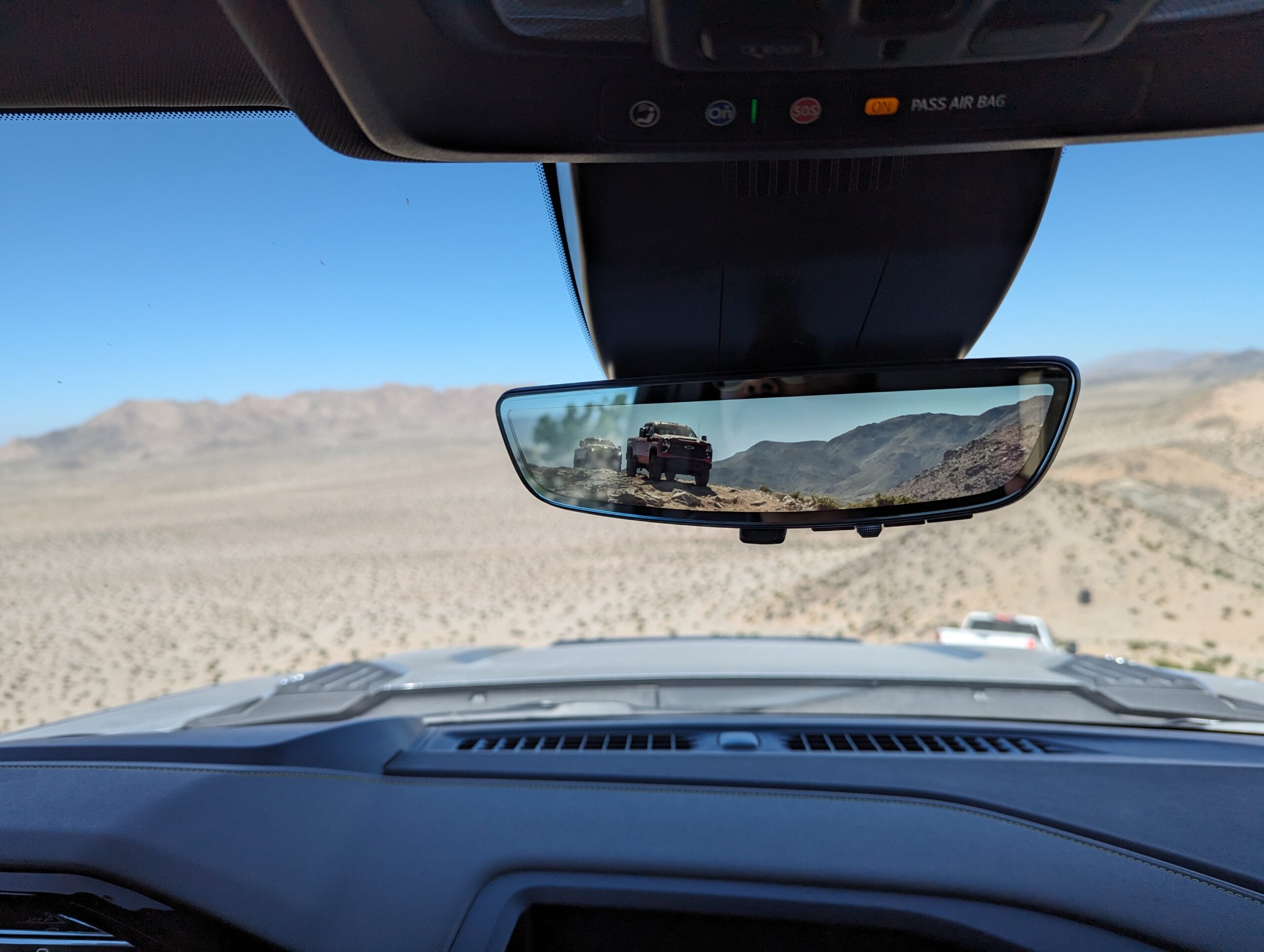
As we mentioned earlier, the Colorado lacks the rearview mirror camera, as seen on the Silverado, Camaro and Corvette. Again, this isn’t a deal-breaker, however it is worth inquiring about.
“We thought about (adding the mirror), and it is definitely something we will consider in the future,” said Julio Bombachini, GM Ride and Handling Engineer, Mid-Sized Trucks.
“We were limited with timing constraints to implement it, since the Bison was a late addition to the program for 2024. But it is certainly on our minds going forward.”
Bombachini also pointed out that engineering sometimes has limitations on just how many cameras they can add. Specifically, the amount that the system (Chevrolet Infotainment 3) can handle. Both the Colorado and Silverado have 10 already, so the system’s management bandwidth is likely maxed.

Towing & Load Capacity
Though similar in many ways, the powerplant is where the Silverado and Colorado ZR2 Bison differ rather significantly.
The Colorado comes with the 2.7-liter Turbo High Output (same as the Z71), boasting a powerful 310 horsepower and 430 lb-ft of torque, seamlessly paired with the 8-speed Hydromatic 8L90 transmission.
While the maximum towing capacity for this version stands at 5,500 pounds (500 pounds less than the standard model), it still offers a respectable maximum payload of 1,050 pounds, just below the standard’s 1,280-pound payload capability.

On the other hand, the Silverado 2500 HD ZR2 Bison comes with either the base 6.6-liter standard V8 or the 6.6-liter Duramax Turbo-Diesel. The gas-fueled base V8 produces 401 horsepower, with a towing capacity of 16,000 pounds when equipped with a standard hitch.
For those seeking more towing power, the turbo-diesel option boasts an impressive 975 pound-feet of torque and the ability to handle up to 18,500 pounds.

However, if you get the Gooseneck/Fifth Wheel Prep package, your towing capacity reduces considerably (16,900 for towing, 15,570 for capacity). Again, not a huge compromise, but just something to note.

AEV Wheels & Mud-Terrain Tires
As you know, the ZR2 comes with 33-inch tires, whereas the Bison comes with 35-inch rubber. The Bison’s suspension has the same 0.5-inch suspension lift from the factory as the ZR2, however according to Bombachini, the Goodyear Wrangler tires add even more. “You get an additional inch of ground lift compared to the base ZR2 on 33s.”
AEV provided the bead lock wheels, and overall, you’ve 12.2-inches of ground clearance; up from 10.7 on standard ZR2. Both vehicles have superb hill descent control, and even the Silverado, though massive, still feels very subtle and gentle when going down hill in 4 High.

Approach & Breakover
Higher ground clearance is the name of the game when it comes to terrain climbing and boulder bashing. However, the ZR2 Bison does have some drawbacks. AEV’s massive steel bumper, for instance, is definitely a plus regarding protection. Despite this, the ZR2 Bison’s approach angle is 38.2 degrees, 4 degrees lower than standard ZR2 due to large mass and size of the bumper.

An acceptable trade-off, though, when you consider the higher lift in chorus with the plating on the rocker panels, the transmission, fuel tank and differential.
View this post on Instagram
Just take look at how seamless the DSSV is at work while dominating these rocks. Chevy encourages the use of the 360-camera (and of course, the rear lockers) while navigating this type of gravel-y terrain.
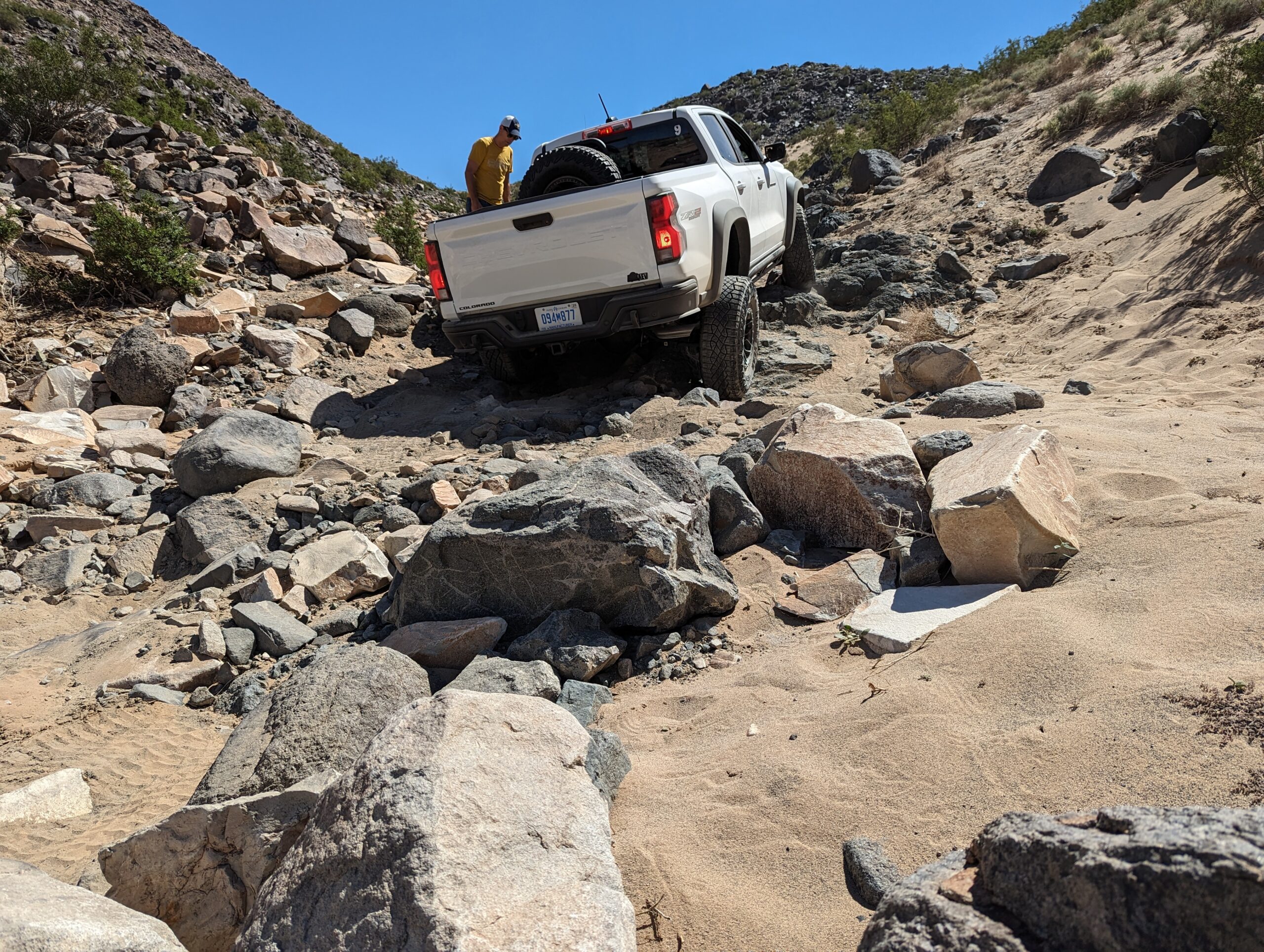
They also recommend using the trucks “Off-Road” mode, which changes your throttle mapping and braking sensitivity to help improve traction, maneuverability and handling while traversing gravel, sand and mud.
View this post on Instagram
Baja Running
It’s well-known that the Colorado is a Baja running jackal, and putting this thing in “Baja” mode is nothing short of magical. Best of all, the added jounce dampers make for some awesome impact absorption when flying over dips and whoops.
The four-wheel drive really shines here, and the launch control works in even the dustiest, sandiest conditions. Getting sideways is always a heart-thumper in any vehicle, but the Bison handles it with such remarkable ease and slip correction. Not something you’d expect with such large tires, but fun no less.
As tempted as you may be, don’t try doing this on the street. Just because it handles superbly on the dirt roads doesn’t mean pavement will be a cinch. Baja mode makes the transmission hold gear for a considerably extended time. And you figure out pretty quickly how that slip correction will turn into a “real thriller.”
If you are in the market for a full-size, fully-capable off-roading phenom with all the amenities and protection, the Silverado 2500HD ZR2 Bison is your ticket to “comfort rock crawling,” even without the jounce dampers. However if you want the apex of mid-size off-roading, the Colorado ZR2 Bison is a real hard one to beat, and it definitely bucks the trend.
Photos: Derin Richardson
Join the Chevrolet Forums now!
