
Suburban Owner Seeks Best Towing Gear Ratio
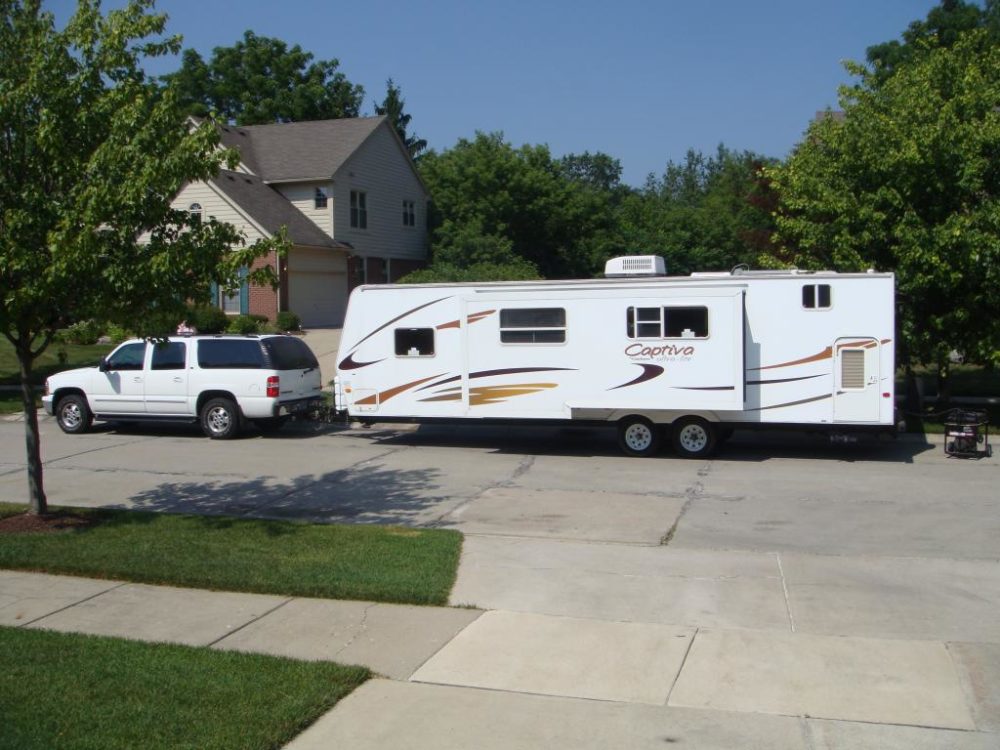
Considering swapping out the rear gears in your Suburban? Make sure you read this valuable advice first.
For most, much of the appeal of the Suburban boils down to its ability to haul lots of people while also towing lots of cargo. For those reasons, the full-size, body-on-frame ‘ute is one of the best options on the market. But like anything else, certain configurations are better than others when it comes to towing. That certainly holds true when it comes to rear gear ratios.
That fact led Chevrolet Forum member and 2013 Suburban owner catdoctor to seek out some advice on the matter in this recent thread.
“I just purchased a 4900 lb travel trailer and made our first road trip. My Suburban has the 5.3 engine & 3.42 rear axle with the trailer tow package. With the trans in fifth gear, my cruising rpm was 2200-2300 rpm. When the engine pulled down to 2000 rpm, it would shift to fourth. Engine had plenty of power and I could actually accelerate up some hills in fourth, and I had to let off to maintain speed.”
“I don’t like the shift to fourth. Engine revs to 2900-3000 or so. I’m thinking about changing the rear axle ratio to 3:73. I’m almost to the top of most of the hills on the interstate when the shift occurs. My thoughts – the cruise rpm should be 2300-2400, but in a better torque band. Then most of the downshifts to fourth would not occur. What are your thoughts?”

Feedback overwhelming supports sticking with the 3.42 gear ratio. Why? It makes only a very subtle difference in revs, for one.
“I did the ‘Great American Road Trip’ (Grand Canyon, Yellowstone, Hoover Dam, Mt Rushmore, Devil’s Tower, The Alamo, Petrified Forest, etc),” says therewolf. In 2015, with a Silverado 2500HD, 4WD, 6.0L, and CCLB (7200LBS), with a camper cap, towing a 25″ travel trailer (5800 LBs).”
“It has 3.42 gears. My overall experience was the drivetrain handled it pretty well. You wanted to stay in low enough gears to keep the revs up on the couple extreme hills of the Rockies, but the 3.42 rear handled it exceptionally well, overall. Trailer tow mode didn’t help much. I found I had to manually shift it into the lower gears to keep the revs up and keep it from overheating.”
“The one time it did overheat, I left it in drive. The low RPMs in the higher gear, combined with the workload, caused the problem.”
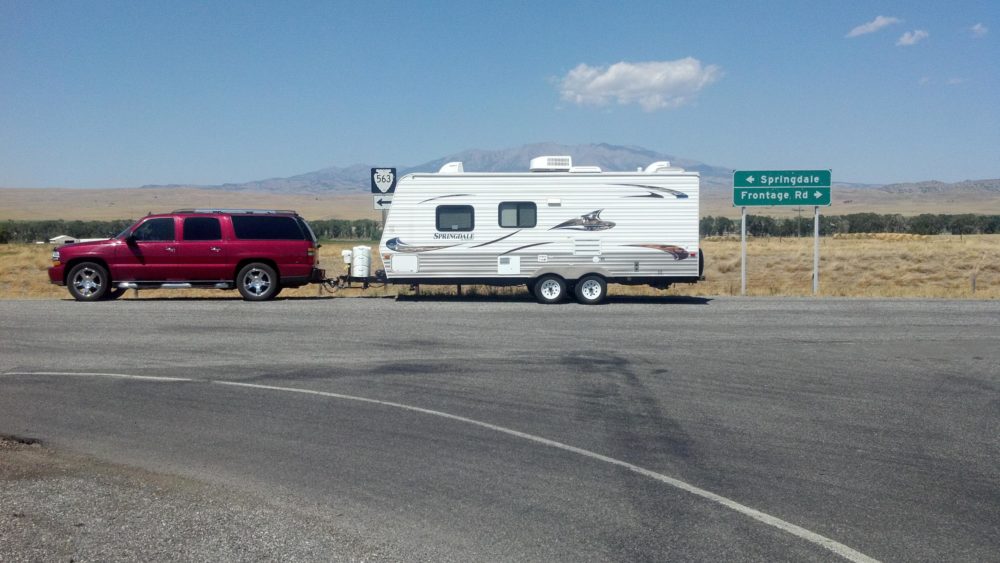
Fellow Suburban owner intheburbs concurs, and he backs it up with a little science.
“Don’t waste your money on such a small shift in axle ratios.
Look at the specs on your engine:
Horsepower: 320 hp @ 5400 rpm
Torque: 335 ft-lbs. @ 4000 rpmYour engine likes to rev. It doesn’t make max torque until 4,000 RPM. 2300-2400 is not a better torque band. On hilly sections, drive in fourth. You won’t hurt anything. Driving in overdrive puts additional stresses on the transmission, since it has to multiply torque because of the overdrive gear ratio. Fourth gear is over a 1:1 ratio, so it’s easier on the transmission.
I just returned from a trip to Yellowstone pulling an 8600lb trailer. We pulled the trailer over 5,000 miles in 2.5 weeks, and I drove the entire time in 4th gear. With the 3.73 gears, the engine was at 3200-3300 at 65 mph. And this engine has 170,000 miles on it. After the trip, my oil level was exactly where it was when I started.”
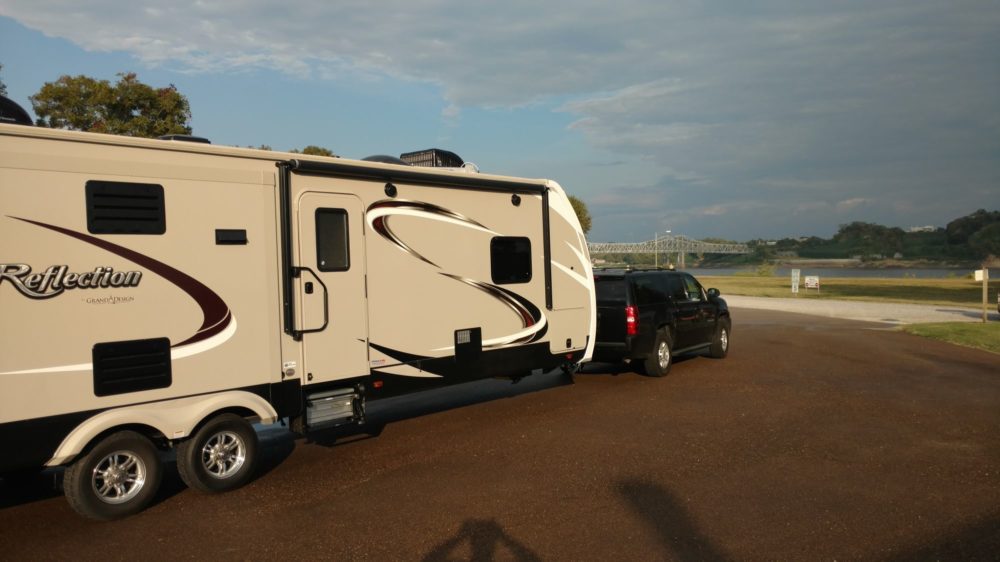
Finally, therewolf points out that a more dramatic change might in order if the OP is looking for a change. But it’ll cost him, of course.
“One thing to consider carefully is the BCR (Benefit-to -Cost Ratio). I got the 3.42 gears installed in 2006. Due to the fact that I wasn’t constantly hauling a lot of weight, I started saving 3 MPG over the original 4.10 gears. It cost $2,000 back then, but in over 10 years I’d say I’ve easily gotten my money back in gas savings. $2,000 divided by 12 years = $167 a year, and for highway travel these 3.42s have been the ticket.”
“But, IMO, if you’re needing a gear change that badly, skip a ratio. The overall difference from 4.10 to 3.73 or 3.73 to 3.42 just isn’t advantageous enough, mechanically, to merit the considerable cost. The original reason I got out of the 4.10 gears was the engine revs in overdrive. On the highway, they were almost insanely high, around 3300 RPM – with no load, at highway cruising speed. I decided the low end torque advantage of the 4.10 simply wasn’t worth what I lost in gas mileage on the top end.”
All of which is outstanding advice. In this case, it appears that the OP is better off sticking with his 3.42 ratio, even if it leads to some seemingly unnecessary gear changes. But we want to know what you think! So head over and drop some of your priceless advice or first hand experience here.
Become a Chevrolet Forums member now — FREE!
