


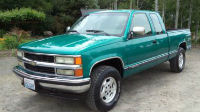
Burning a quart of oil every 200 miles


Thread Starter
CF Beginner
Joined: Jan 2023
Posts: 3
Likes: 0
 Burning a quart of oil every 200 miles
Ticking noise coming from front passenger side of the motor, when you cup the exhaust the tick stops, but oil coming out of exhaust and up the breather as well. Not a drip on the ground, but oil is also seeping from the oil cap. Residual oil is also making its way down the oil pan, and the flywheel shroud. With brand new gaskets on every spot on the motor, still only idles at about 15 psi when engine gets done with a long drive, 30 psi at 1800 rpm. Recently replaced the pcv, and egr valves, along with the vacuum hoses. I'm at a loss, thanks for the read.

CF Veteran

Joined: May 2011
Posts: 1,578
Likes: 302
From: Central Iowa
If liquid oil is coming out of the exhaust, there’s a [generally not good] reason for it.
Is it misfiring? I’d be surprised if not.
I highly recommend you stop driving it if you can, or minimize the amount of driving as much as possible until this is resolved.
A quick test is to check manifold vacuum at idle with the engine at operating temperature. It should read 15-22 in*Hg of vacuum with a steady needle. Minor fluctuations are normal - but oscillations of 3 in*Hg or more indicates mechanical problems.
If excessive oscillations are observed, restore vacuum lines/plugs and adapt the vacuum gauge to create a seal on the engine oil dipstick tube.
Please Note: The accuracy of this test is dependent on a dipstick tube that is in good enough condition to hold vacuum. If the dipstick tube on your truck is rusted or punctured, the results of this test are unreliable unless the leaks are sealed or the tube replaced (Dorman makes several of them).
Also Note: This seems like the obvious thing to do but I don’t know your skill level, so I’ll state it anyway - remove the dipstick first. (Good advice for several non-mechanical situations as well. )
)
At idle, the vacuum at the dipstick tube should read 0-2 in*Hg - the closer to zero, the better. If there’s positive pressure (PSI not in*Hg), particularly in time with the peak of a needle swing, it is likely the piston/piston rings are at fault. However - this could only be confirmed by visual inspection of the cylinder or compression and leak down testing.
Respond with the results and I can guide you on the next steps of diagnosis.
Is it misfiring? I’d be surprised if not.
I highly recommend you stop driving it if you can, or minimize the amount of driving as much as possible until this is resolved.
A quick test is to check manifold vacuum at idle with the engine at operating temperature. It should read 15-22 in*Hg of vacuum with a steady needle. Minor fluctuations are normal - but oscillations of 3 in*Hg or more indicates mechanical problems.
If excessive oscillations are observed, restore vacuum lines/plugs and adapt the vacuum gauge to create a seal on the engine oil dipstick tube.
Please Note: The accuracy of this test is dependent on a dipstick tube that is in good enough condition to hold vacuum. If the dipstick tube on your truck is rusted or punctured, the results of this test are unreliable unless the leaks are sealed or the tube replaced (Dorman makes several of them).
Also Note: This seems like the obvious thing to do but I don’t know your skill level, so I’ll state it anyway - remove the dipstick first. (Good advice for several non-mechanical situations as well.
)At idle, the vacuum at the dipstick tube should read 0-2 in*Hg - the closer to zero, the better. If there’s positive pressure (PSI not in*Hg), particularly in time with the peak of a needle swing, it is likely the piston/piston rings are at fault. However - this could only be confirmed by visual inspection of the cylinder or compression and leak down testing.
Respond with the results and I can guide you on the next steps of diagnosis.


Thread
Thread Starter
Forum
Replies
Last Post
drgnflys
General Tech
3
Nov 26, 2014 12:52 PM
mshaw130
Silverado, Sierra & Fullsize Pick-ups
2
Aug 2, 2012 9:38 PM