


3500 towing question


Thread Starter
CF Beginner

Joined: Aug 2018
Posts: 21
Likes: 0
 3500 towing question
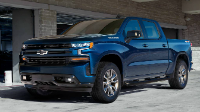
I am thinking of buying a new 3500 4x4 crew cab, diesel, SRW and towing a 10,000 lb bumper-pull travel trailer. As I understand the 4500 has heavier brakes, would it be better to get a 4500? Also, would getting DRW with the 4500 help reduce crosswind swaying of the trailer? Thanks. john

CF Beginner
Joined: Aug 2025
Posts: 4
Likes: 0
From: Charlotte, NC via Baton Rouge, LA and Houston, TX
In my opinion, as one who’s owned three Dmax 3500 DRW, hauling a 44’ 16k lbs 5th wheel all over the country, I would not want a DRW for a bumper pull travel trailer and with the trailer being 10k lbs, a 3500 is more than enough. Definitely don’t “need” a 4500. If you want, that’s different.
Personally, all things considered, with a travel trailer, I’d want a SRW. The dually is going to give you minimal added sway control because it’s still a bumper pull and the weight of the trailer sitting on the bumper vs over the rear axle of DRW which is one of the purposes of a DRW.
Also, as a daily driver, a dually will beat you to death. Unless you’re touring the country full time, or like I was for work, always pulling, you’re 100% safe with a 3500 SRW and will be more comfortable.
Once I quit pulling “all the time” I couldn’t wait to get rid of my DRW and get a SRW.
Just my .02¢
Personally, all things considered, with a travel trailer, I’d want a SRW. The dually is going to give you minimal added sway control because it’s still a bumper pull and the weight of the trailer sitting on the bumper vs over the rear axle of DRW which is one of the purposes of a DRW.
Also, as a daily driver, a dually will beat you to death. Unless you’re touring the country full time, or like I was for work, always pulling, you’re 100% safe with a 3500 SRW and will be more comfortable.
Once I quit pulling “all the time” I couldn’t wait to get rid of my DRW and get a SRW.
Just my .02¢
Thread Starter
CF Beginner
Joined: Aug 2018
Posts: 21
Likes: 0
In my opinion, as one who’s owned three Dmax 3500 DRW, hauling a 44’ 16k lbs 5th wheel all over the country, I would not want a DRW for a bumper pull travel trailer and with the trailer being 10k lbs, a 3500 is more than enough. Definitely don’t “need” a 4500. If you want, that’s different.
Personally, all things considered, with a travel trailer, I’d want a SRW. The dually is going to give you minimal added sway control because it’s still a bumper pull and the weight of the trailer sitting on the bumper vs over the rear axle of DRW which is one of the purposes of a DRW.
Also, as a daily driver, a dually will beat you to death. Unless you’re touring the country full time, or like I was for work, always pulling, you’re 100% safe with a 3500 SRW and will be more comfortable.
Once I quit pulling “all the time” I couldn’t wait to get rid of my DRW and get a SRW.
Just my .02¢
Personally, all things considered, with a travel trailer, I’d want a SRW. The dually is going to give you minimal added sway control because it’s still a bumper pull and the weight of the trailer sitting on the bumper vs over the rear axle of DRW which is one of the purposes of a DRW.
Also, as a daily driver, a dually will beat you to death. Unless you’re touring the country full time, or like I was for work, always pulling, you’re 100% safe with a 3500 SRW and will be more comfortable.
Once I quit pulling “all the time” I couldn’t wait to get rid of my DRW and get a SRW.
Just my .02¢
CF Beginner
Joined: Aug 2025
Posts: 4
Likes: 0
From: Charlotte, NC via Baton Rouge, LA and Houston, TX
Tigers: Many thanks. Good info I was not aware of, having zero experience dragging a travel trailer. I have used my present 3500 to drag around a 10,000 lb skid steer and it never seemed to complain on any hills. No DRW simplifies things and $$. I will check into getting a 3500 SRW w/ an 8-9' flatbed, All I have seen so far are commercially made DRW models. j
Many aftermarket truck outfitters sell flatbeds and stick them on SRW, if that’s the route you want to go. Just think of all the rig welders driving around in new $100k trucks that aren’t DRW.
Last edited by GeauxTigers; Aug 8, 2025 at 8:43 AM.

CF Junior Member

Joined: Jan 2012
Posts: 86
Likes: 5
An F-250 SRW will be more than adequate for the trailer. More important is the engine and the gearing. I want to be able to accelerate to a safe speed to merge with traffic and to safely pass a very slow moving tractor and trailers rig going up steep grades. Fuel economy is nowhere near as important.
Thread Starter
CF Beginner
Joined: Aug 2018
Posts: 21
Likes: 0
An F-250 SRW will be more than adequate for the trailer. More important is the engine and the gearing. I want to be able to accelerate to a safe speed to merge with traffic and to safely pass a very slow moving tractor and trailers rig going up steep grades. Fuel economy is nowhere near as important.
CF Junior Member
Joined: Jan 2012
Posts: 86
Likes: 5
With a diesel engine the 3.73 gears are standard but with gas engines as low as you can find. With a 10-speed transmission a 3.55 would probably be OK but avoid the standard gears which are designed to maximize fuel economy and ignore towing needs. It surprised me to see that most gas engine powered trucks with a tow package did not have the larger fuel tank or the lower gears.
Trending Topics
Thread Starter
CF Beginner
Joined: Aug 2018
Posts: 21
Likes: 0
diesel
With a diesel engine the 3.73 gears are standard but with gas engines as low as you can find. With a 10-speed transmission a 3.55 would probably be OK but avoid the standard gears which are designed to maximize fuel economy and ignore towing needs. It surprised me to see that most gas engine powered trucks with a tow package did not have the larger fuel tank or the lower gears.
CF Junior Member
Joined: Jan 2012
Posts: 86
Likes: 5
I used the Chevy with the LML diesel engine which had teething problems with NOx sensors and the programming for the emissions system. Lots of power and 30% more miles per gallon of fuel but at the cost of double the operating costs and a great deal less reliability for the 2011 truck. I had to abort three trips due to problems with the sensors and programming bugs with the engine and that is why I sold it. By 2025 the bugs should hopefully have been ironed out.
The 2500 and 3500 GM/Chevy trucks are virtually identical except for cab options and the availability of DRW from the factory. I wanted the shorter wheelbase of the double cab and standard 6.5 foot bed and this is doubly important with a trailer. I made U-turns and hard left turns at signals and never needed to backup for a second pass.
I did need to spend more time on trip planning to be sure that there was a place that pumped diesel and would be open when we were in that area.
On our trips I counted how many pickups with large travel trailers were SRW versus DRW and 80% were SRW and the fewer DRW were towing large commercial trrailers. I swapped out the factory tires that were rated for 2600 lbs for Nitto tires rated at 3750 lbs per tire. I gained 2,300 lbs of payload capacity by doing this and had no need for DRW. I was able to use the factory rims with the aftermarket tires.
The 2500 and 3500 GM/Chevy trucks are virtually identical except for cab options and the availability of DRW from the factory. I wanted the shorter wheelbase of the double cab and standard 6.5 foot bed and this is doubly important with a trailer. I made U-turns and hard left turns at signals and never needed to backup for a second pass.
I did need to spend more time on trip planning to be sure that there was a place that pumped diesel and would be open when we were in that area.
On our trips I counted how many pickups with large travel trailers were SRW versus DRW and 80% were SRW and the fewer DRW were towing large commercial trrailers. I swapped out the factory tires that were rated for 2600 lbs for Nitto tires rated at 3750 lbs per tire. I gained 2,300 lbs of payload capacity by doing this and had no need for DRW. I was able to use the factory rims with the aftermarket tires.
Thread Starter
CF Beginner
Joined: Aug 2018
Posts: 21
Likes: 0
I used the Chevy with the LML diesel engine which had teething problems with NOx sensors and the programming for the emissions system. Lots of power and 30% more miles per gallon of fuel but at the cost of double the operating costs and a great deal less reliability for the 2011 truck. I had to abort three trips due to problems with the sensors and programming bugs with the engine and that is why I sold it. By 2025 the bugs should hopefully have been ironed out.
The 2500 and 3500 GM/Chevy trucks are virtually identical except for cab options and the availability of DRW from the factory. I wanted the shorter wheelbase of the double cab and standard 6.5 foot bed and this is doubly important with a trailer. I made U-turns and hard left turns at signals and never needed to backup for a second pass.
I did need to spend more time on trip planning to be sure that there was a place that pumped diesel and would be open when we were in that area.
On our trips I counted how many pickups with large travel trailers were SRW versus DRW and 80% were SRW and the fewer DRW were towing large commercial trrailers. I swapped out the factory tires that were rated for 2600 lbs for Nitto tires rated at 3750 lbs per tire. I gained 2,300 lbs of payload capacity by doing this and had no need for DRW. I was able to use the factory rims with the aftermarket tires.
The 2500 and 3500 GM/Chevy trucks are virtually identical except for cab options and the availability of DRW from the factory. I wanted the shorter wheelbase of the double cab and standard 6.5 foot bed and this is doubly important with a trailer. I made U-turns and hard left turns at signals and never needed to backup for a second pass.
I did need to spend more time on trip planning to be sure that there was a place that pumped diesel and would be open when we were in that area.
On our trips I counted how many pickups with large travel trailers were SRW versus DRW and 80% were SRW and the fewer DRW were towing large commercial trrailers. I swapped out the factory tires that were rated for 2600 lbs for Nitto tires rated at 3750 lbs per tire. I gained 2,300 lbs of payload capacity by doing this and had no need for DRW. I was able to use the factory rims with the aftermarket tires.