When you click on links to various merchants on this site and make a purchase, this can result in this site earning a commission. Affiliate programs and affiliations include, but are not limited to, the eBay Partner Network.
Tahoe & SuburbanThe power, space, and brutal towing ability make the Tahoe and its longer sibling, the Suburban, arguably the best full size SUV's on the market today.
didnt look like a hard job for do it yourself and that T part is cheap, oilcanhenry made it seam that it would be more difficult than it is
In my defense you can read that I didn't see the "T" connection to the heater hose, and those aluminum tubes appear much as an A/C tube would. Large SUV's are out of my league apparently. The advice I gave you for an A/C system was spot on accurate.
Last edited by oilcanhenry; Oct 23, 2019 at 4:25 AM.
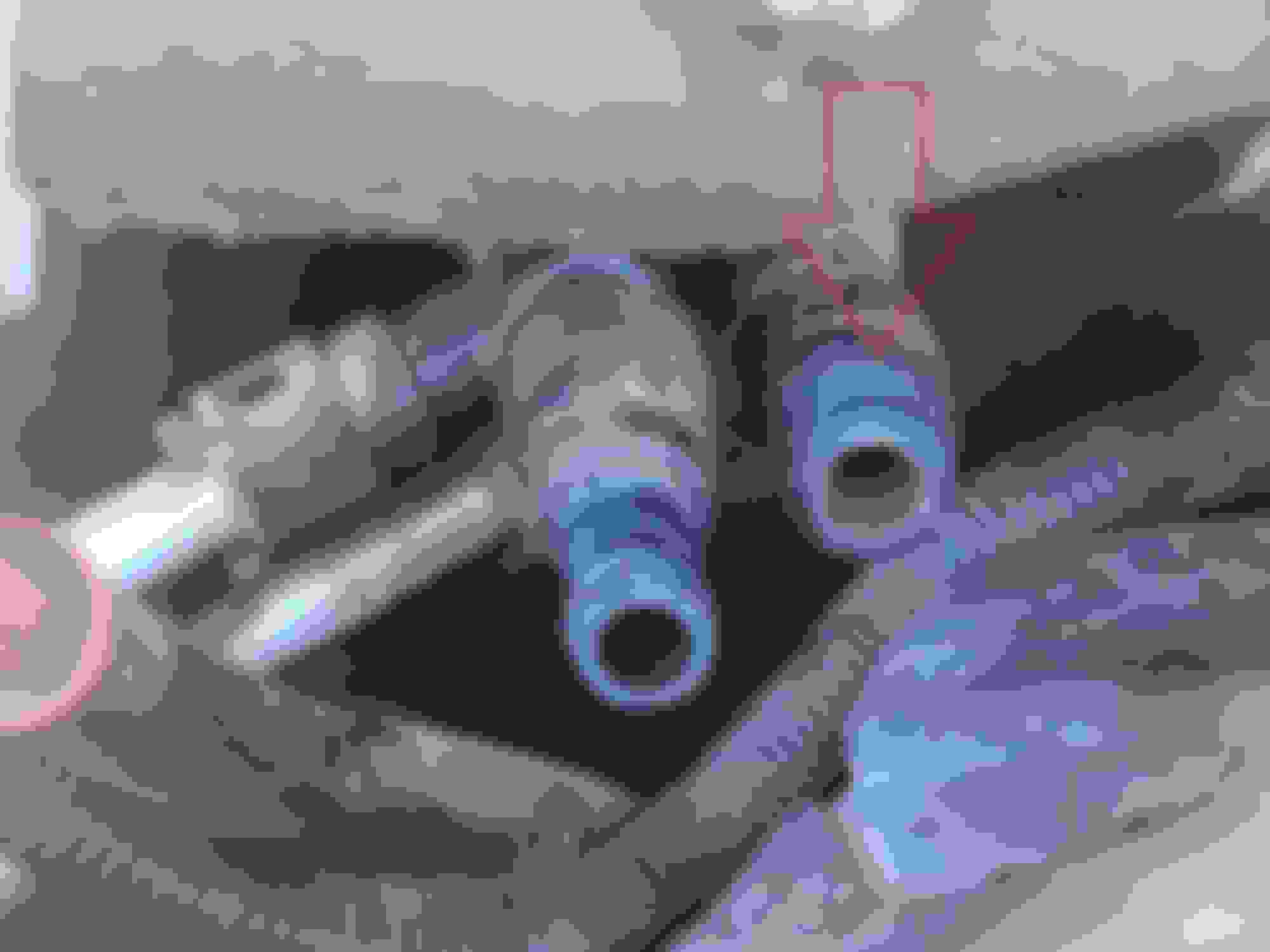
I just did similar last year on our 2005 6.0 Yukon Denali; used a little green plastic tool (designed for this) to remove broken fitting.
Our Denali had two plastic quick-disconnect T-fittings/Y-fittings at the firewall and then two straight plastic quick-disconnect fittings that led to the engine. One ours, it was one of the straight fittings that cracked and leaked (fitting was 2 years old). Internet search shows this as a common issue.
Our Denali had two plastic quick-disconnect T-fittings/Y-fittings at the firewall and then two straight plastic quick-disconnect fittings that led to the engine. One ours, it was one of the straight fittings that cracked and leaked (fitting was 2 years old). Internet search shows this as a common issue.
Much different heater hose connectors then the ones on my Chevy 1998 K-1500. But it's a newer, different model, so that would only make sense. Why is everything plastic, the newer you go up in time? Even my rig has the plastic radiator tanks.
Last edited by oilcanhenry; Oct 24, 2019 at 2:28 AM.
To me, the plastic fittings, and quick-disconnects are not a good engineering idea. So many posts on Internet of them breaking or leaking. I guess old-fashioned metal hose barbs and hose clamps are too old-school.
many fwd chevys come with plastic elbows that connect the water pump to the engine. the main issue is the O-rings get stuck but then if you apply pressure you'll break the elbow. when i didnt some intake work on my imp i knew this would be an issue and got the aluminum ones. swapped them out with and ended up breaking one of the plastic fittings. now that i think about it if the o-ring gets stuck anyway it might be better for the elbow to break vs the water pump.
many fwd chevys come with plastic elbows that connect the water pump to the engine. the main issue is the O-rings get stuck but then if you apply pressure you'll break the elbow. when i didnt some intake work on my imp i knew this would be an issue and got the aluminum ones. swapped them out with and ended up breaking one of the plastic fittings. now that i think about it if the o-ring gets stuck anyway it might be better for the elbow to break vs the water pump.
Yeah, Scotty Kilmer, the mechanic on YouTube, was showing how one of the European vehicle manufacturers were using aluminum-alloy water pump housings, but the vanes, were made of plastic. What would happen is that the plastic vane attaching to the drive-shaft would break away from the shaft and no longer spin, so it looked good on the outside like no leaks from the weep-hole or anything, but no water was being pumped! Now that is some very poor engineering if you ask me, just to save some Euros!
To me, the plastic fittings, and quick-disconnects are not a good engineering idea. So many posts on Internet of them breaking or leaking. I guess old-fashioned metal hose barbs and hose clamps are too old-school.
Agreed on that. The plastic parts are OK if it can be changed out quick and easy, but if not then it's bound to go bad if the heat gets to it for years.Had a C-1500 for a while, and the plastic crimped-on radiator tank blew up as I was parking the vehicle. Coolant all over the place. But I guess it's cheaper then soldiering like the old metal tanks had. Price for a new radiator for my K-1500 runs from $86 USD for a very cheap one to $268 USD for a genuine ACDelco unit, Still has the original one however.
Back in the late 1980's GM tried doing the same with the heater core but they leaked way too often, so they went back to a full aluminum-alloy heater core and tanks. Changed one out of a 1988 C-2500. Thankfully I was able to remove the bottom section of the climate control box without ripping the dash apart. New unit was all aluminum-alloy and tubes.
Yeah, Scotty Kilmer, the mechanic on YouTube, was showing ....
Yeah, my brother-in-law watched one of Scotty's videos on cleaning a catalytic converter with lacquer thinner.
He set the car on fire.
That set the garage on fire.
That set the house on fire.
At least there was insurance, though not for all the possessions. Mrs. Cusser is one-third owner of the remnants....
Yeah, my brother-in-law watched one of Scotty's videos on cleaning a catalytic converter with lacquer thinner.
He set the car on fire.
That set the garage on fire.
That set the house on fire.
At least there was insurance, though not for all the possessions. Mrs. Cusser is one-third owner of the remnants....
I stay as far away from things that need a respirator like lacquer thinner. Most contain toluene, xylene, acetone and methyl ethyl ketone, ain't the same as cleaning solvent and/or Stoddard solvent, which need gloves mostly, although I spent too much time in High School auto-shop, cleaning parts with no petroleum-proof gloves, but it was not lacquer thinner, just cleaning solvent. That lacquer thinner is similar to aviation gasoline, in that they both smell awful and are not good to breath it at all. Both evaporate very easily. AvGas can knock a person out if the fumes are not contained, or no inhalant mask is used. Yeah, Scotty really blew it with that particular content. I've seen it. No way is lacquer thinner getting in or on any parts, or the fuel tank, on my vehicles..