


Cylinder 3 Misfire. IM STUMPED!


Thread Starter
CF Beginner
Joined: Dec 2021
Posts: 1
Likes: 0
 Cylinder 3 Misfire. IM STUMPED!
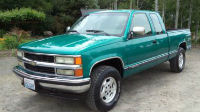
I’m new to the forum so please forgive me if it takes a little bit for me to figure out. I have a 99 Chevy k2500, 5.7 vortec, with a cylinder 3 and 4 misfire that I cannot get rid of for the life of me. It’s not showing any codes but it’s got a rough idle and my scanner is counting hundreds of misfires per minute on cylinder 3. And a very few misfires on cylinder 4. I’ve been throwing parts at it, but I had reason to believe each part would’ve been the issue due to common issues with these engines. Here’s what I’ve replaced so far with no luck…spark plugs and wires, distributor cap and rotor, entire spider injection assembly, distributor, coolant temp sensor, compression on #3 is 130psi cranking with throttle open, I’ve switched spark plugs and wires with other cylinders and no change. Fuel pressure is in spec. The plug isn’t wet and it looks like it’s getting spark but it’s got an obvious misfire without any code. Also checked vacuum and the gauge is steady and in spec. Checked for vacuum leaks all over the lines and around the intake manifold with carb/choke cleaner. No luck. I’d really appreciate it if someone could give me some helpful advice because I’m completely stumped and I don’t want to keep throwing parts at it. Thanks in advance!

CF Veteran

Joined: May 2011
Posts: 1,578
Likes: 302
From: Central Iowa
Have you noticed if it’s using oil or coolant?
What is the compression on cylinders 1&5?
With the key on, engine off, check for battery voltage on the pink wires by back probing at the injector connector. I can’t recall the layout of the connector but if one of the wires has significantly less voltage than the others that’s the suspect circuit.
Set #3 to TDC compression stroke, then remove the crank sensor. Inspect the tone ring through the opening, making sure to rotate the crank at least 45* in either direction. Pulling all plugs and a helper make this much easier. You’re looking for cracks, chips or gouges in the teeth of the tone ring.
What is the compression on cylinders 1&5?
With the key on, engine off, check for battery voltage on the pink wires by back probing at the injector connector. I can’t recall the layout of the connector but if one of the wires has significantly less voltage than the others that’s the suspect circuit.
Set #3 to TDC compression stroke, then remove the crank sensor. Inspect the tone ring through the opening, making sure to rotate the crank at least 45* in either direction. Pulling all plugs and a helper make this much easier. You’re looking for cracks, chips or gouges in the teeth of the tone ring.

Thread
Thread Starter
Forum
Replies
Last Post
snunicycler
Silverado, Sierra & Fullsize Pick-ups
0
Jan 29, 2011 9:11 PM

