When you click on links to various merchants on this site and make a purchase, this can result in this site earning a commission. Affiliate programs and affiliations include, but are not limited to, the eBay Partner Network.
I think this is where I post this but I have this 2003 Silverado 5.3 that has an engine light that blinks as soon as it go above 2k rpm’s in any gear, I’ve replaced all coils, all spark plug wires, intake manifold gasket and MAF sensor. A while ago when I first got the truck I replaced the spark plugs and 02 sensors, along with throwing long tube headers on with hi-flow cats, ever since it has always misfired but it never blinked, this truck eats transmissions for breakfast because it switched in and out of limp mode is my guess and messes with the shift times, I have no idea, I didn’t think that the long tube headers would cause that but j need to hear from other people and there ideas, I was going to get it tuned to get the MAF deleted but wanted to do it right before I mess with the tune, it had a cold air intake but I replaced it with a factory intake. I used to have only one code for P0300 and this truck also eats O2 sensors and I now have heater O2 sensors codes for those circuits. Please help
Last edited by n0thing78; Mar 13, 2024 at 9:05 AM.
First - whenever the Check Engine Light "blinks", it is actually Flashing which means one thing - Too much fuel is getting into the catalytic converter(s) and if it continues, you risk destroying the catalytic converter. In other words, stop running the engine and diagnose why too much raw fuel is getting to the catalytic converter(s).
Because of the Flashing Check Engine Light, this could be the reason why your engine is going into Reduced Power Mode and your transmission is not shifting properly. It may have nothing to do with your transmission at all.
Second, The P0135, P0141, and P0155 codes are telling you that there is a problem with the 3 out of 4 of the Oxygen Sensors heater circuits. Either there is a problem in the wiring to the O2 sensors, or the heater elements have burned out. Check the wiring harnesses and make sure that they have not been touching the new headers you have installed, burned the insulation away and now some of the wires are shorting out.
The first action you should take is to determine why too much fuel is getting into the exhaust stream or else you are going to be replacing one or both of your new high flow catalytic converters die to one or both of them melting. Check to see if the fuel pressure regulator is functioning properly - pull the vacuum line off of it's nipple to see if any fuel runs out of either the nipple or the vacuum line. If fuel does run out, then you found your problem. Pull the spark plugs and see if any are wet or sooty looking (these can be signs of extra gas getting into that particular cylinder.
While you are at it, look over the electrical connections to the fuel injectors and the ignition coils to make sure that they are all the connectors are seated properly.
Now, regarding the P0300 DTC, it might not be real. It could be due to the excess fuel being dumped into the exhaust and trying to ignite and being picked up as a knock. Yes, a knock sensor can set a P0300.
If you have a live data scanner in addition to your code reader, I would drive around normally and monitor each cylinder for misfires to see if one or more cylinders is actually misfiring.
Because of the headers you installed, double check all the engine wiring to make sure that the wiring is secure and away from the headers to keep the insulation from melting/burning and the wiring from shorting out.
Good Luck!
Last edited by chem_man; Mar 15, 2024 at 10:13 AM.



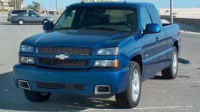


 Misfire P0300 above 2k RPMs (2003 Silverado 5.3 4wd)