When you click on links to various merchants on this site and make a purchase, this can result in this site earning a commission. Affiliate programs and affiliations include, but are not limited to, the eBay Partner Network.
CamaroThis classic Pony Car, the Camaro left the lineup in 2002 and was thought to be gone forever, but is made its long-awaited return in the 2010 model year with a 300 HP V6 and a 426 HP V8 SS
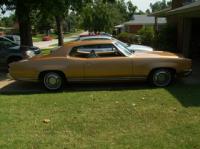
I bought a 69 Pro Street Camaro RS and the gent that built it out in a 454 with NOS and a 350 turbo 3 speed auto trans. I took it to the Dyno and I was thoroughly disappointed as it posted around 200 HP but sounds like the beast. The performance mechanics suggest there is something wrong but plugs and compression tests were good (120-125 on all 8 cylinders), they mentioned that the cam may be off by a tooth as if flies through first and second gear but in third it stops at 4100rpm and climbs very slow from there. My knowledge on cams is low and wanted to ask if anyone else may have any ideas or thoughts? Thanks in advance for any advice you may have?
That, and hi compression heads. OP posted 200 hp at I guess 4100 rpm, i'd ? the dyno.
Yeah, 200 horsepower is/was way too low for a 1969 Chevy engine. Only thing was you had to use leaded gasoline to cushion the valves, unless you had the sodium filled valves and Stallight valve seats. Those were uncommon and a lot of people had to add lead to the unleaded gasoline of 1973-74 gasoline or some motor oil down the gas tank. I was that or put new, low-compression heads with hardened valve seats on the motor. Once 1975 rolled up, leaded gasoline was gone completely,. due to the fact that Lead plugs up the catalytic converters.
Yeah, 200 horsepower is/was way too low for a 1969 Chevy engine. Only thing was you had to use leaded gasoline to cushion the valves, unless you had the sodium filled valves and Stallight valve seats. Those were uncommon and a lot of people had to add lead to the unleaded gasoline of 1973-74 gasoline or some motor oil down the gas tank. I was that or put new, low-compression heads with hardened valve seats on the motor. Once 1975 rolled up, leaded gasoline was gone completely,. due to the fact that Lead plugs up the catalytic converters.
Leaded gas wasn't gone in 1975, it was sold along side the new unleaded. Leaded gas was still legally sold for road use (in non converter cars) until Jan 1 1996.
Would a cam that was off by a tooth cause the drop in compression? Other than that, I would have no idea what the issue is.
Yes, it could cause a drop in compression if the cam timing change means that an intake valve is seating later in the cycle than it was designed to, so the piston is already rising on the compression stroke before the valve closes.
Leaded gas wasn't gone in 1975, it was sold along side the new unleaded. Leaded gas was still legally sold for road use (in non converter cars) until Jan 1 1996.
That is true, but for other states. In California, leaded gasoline, even low-lead types of gasoline were outlawed by 1975 in California.
Gasoline-powered aircraft can still buy low-lead aviation fuel, however. Lots of people were adding leaded-substitute to the gasoline (CA didn't outlaw that) into their muscle cars, which you could buy at almost any auto parts store.
I sure hope they were wearing rubber gloves, as lead in that concentrated form will be almost instantly absorbed through the skin and into the bloodstream and as I imagine that you know, that is not a good thing at all.
Something simply is not correct about this article. You see I was in the business of selling and delivering fuels back then, mostly Chevron fuels to be precise. Before 1975, Chevron did sell a low-lead, regular grade gasoline, starting around 1970 or so.
Before the year 1975 came around, they dropped the low-lead regular gasoline, and came out with mid-grade "Plus" gasoline, which had no lead. So to be exact, by 1975, Chevron sold absolutely no leaded gasoline at all in California. They had 87 octane regular unleaded gasoline; 89 octane unleaded mid-grade gasoline, and 91 octane Supreme unleaded gasoline Not one of them had any lead in it whatsoever.
I have no idea what the LA Times speaks of at all, but they are sadly mistaken about leaded gasoline in California. I only know that I was in the biz, and they were not, so I am the expert on this matter, not the LA Times, and they are completely incorrect about leaded Chevron gasoline, sold in CA in 1991-1992.
To wit, they are sadly inaccurate in this article. California wanted lead from gasoline and paints _gone_, and that is exactly what happened. One could still use automotive lead-based paints, but only on some commercial vehicles, but not light vehicles at all.






 69 Camaro issue with RPM