


Engine sounds terrible

Thread Starter
CF Beginner
Joined: Dec 2023
Posts: 19
Likes: 1
 Engine sounds terrible
I wanted to get some input and see what everyone thinks about this.
I drove my suburban a few times a week, and it ran fine. I parked it, still running fine. Went to start it the next day and it sounded like either it threw a rod or dropped a valve. Almost like someone took a handful of gravel and put into the oil. It'll still start and run, but it makes terrible noise and shakes violently.
Regular oil changes every 3,000 to 3,500 miles due to high mileage. Still ate about a quart of oil between changes, which I've heard is normal for GM engines from about that time. Always topped it off when the oil got about a quart low anyway. No evidence of failed head gaskets in oil or coolant.
I've come to terms that it's gone. I just wanted to know what y'all think it may be, and why it would run fine one day and then grenade the next. I'm on fixed income so I cannot afford to replace the engine.
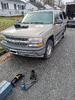
2001 suburban 1500 LS, 5.3, 195,000 miles
I drove my suburban a few times a week, and it ran fine. I parked it, still running fine. Went to start it the next day and it sounded like either it threw a rod or dropped a valve. Almost like someone took a handful of gravel and put into the oil. It'll still start and run, but it makes terrible noise and shakes violently.
Regular oil changes every 3,000 to 3,500 miles due to high mileage. Still ate about a quart of oil between changes, which I've heard is normal for GM engines from about that time. Always topped it off when the oil got about a quart low anyway. No evidence of failed head gaskets in oil or coolant.
I've come to terms that it's gone. I just wanted to know what y'all think it may be, and why it would run fine one day and then grenade the next. I'm on fixed income so I cannot afford to replace the engine.
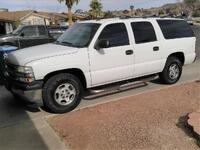
2001 suburban 1500 LS, 5.3, 195,000 miles

Thread Starter
CF Beginner
Joined: Dec 2023
Posts: 19
Likes: 1
Normally, oil pressure would be about 40-45 on cold start. Accelerating, it would get up to 60-65. Right now, I started it, and oil pressure was slow to climb. It crept up to about 20 and stayed. Then I hit the gas and it went to around 30-35. I have a hole in it now, because there's a puddle of oil underneath of it. There's also a little splash of oil on the passengers side frame, around the cylinder 6/8 area.
Edit: it was showing codes P0137 and P0155 (O² sensor codes) and P0300, but it didn't show any specific cylinder misfire.
Edit: it was showing codes P0137 and P0155 (O² sensor codes) and P0300, but it didn't show any specific cylinder misfire.
Last edited by CaughtInCeilingFan; Apr 17, 2025 at 6:18 PM.
Thread Starter
CF Beginner
Joined: Dec 2023
Posts: 19
Likes: 1
I get that it's a catastrophic failure. I'm really just trying to figure out what went wrong for it to fail like that. Runs fine, park it, start it the next day and the engine is shot. How or why did it do that from sitting overnight?
I haven't bothered getting underneath it to look, but I've got oil on the frame, passengers side, right next to the engine
I haven't bothered getting underneath it to look, but I've got oil on the frame, passengers side, right next to the engine
Trending Topics

CF Pro Member


Joined: Mar 2024
Posts: 680
Likes: 105
From: Huntsville, AL
So sorry to hear about this catastrophic failure.
Sadly, things can break when you shutoff the engine. That is probably what happened here. It didn't fail while sitting, but on stopping, or right when you turned the key to crank it the next morning.
Back in 1984, I drove by my work on an off-day to pickup my paycheck and go to the bank, and the Pontiac Ventura that was running great when I parked would not crank, and it was blowing gas out of the top of the carburetor. I had it towed home, and as a college student, then spent the July 4th holiday working on my car. In my case - the crankshaft gear that ran the timing chain had shed almost half of its phenolic teeth, and I just happened to turn off the car in such a way that the chain was able to slip. Or it was sitting with that bare spot at the bottom, and the chain slipped when I turned the key to start it. While running it apparently was catching enough teeth to keep going.
The guy at the NAPA counter asked if I wanted another gear with the phenolic teeth, or a cast iron one. Guess which way I went? . Apparently GM back in the 70's went to gears like that because they allowed the engine to run quieter. But phenolic/plastic teeth bonded to a cast iron body never made sense in my book. I later changed the oil pan gasket and found most of those teeth down in the pan...
Sadly, things can break when you shutoff the engine. That is probably what happened here. It didn't fail while sitting, but on stopping, or right when you turned the key to crank it the next morning.
Back in 1984, I drove by my work on an off-day to pickup my paycheck and go to the bank, and the Pontiac Ventura that was running great when I parked would not crank, and it was blowing gas out of the top of the carburetor. I had it towed home, and as a college student, then spent the July 4th holiday working on my car. In my case - the crankshaft gear that ran the timing chain had shed almost half of its phenolic teeth, and I just happened to turn off the car in such a way that the chain was able to slip. Or it was sitting with that bare spot at the bottom, and the chain slipped when I turned the key to start it. While running it apparently was catching enough teeth to keep going.
The guy at the NAPA counter asked if I wanted another gear with the phenolic teeth, or a cast iron one. Guess which way I went?
. Apparently GM back in the 70's went to gears like that because they allowed the engine to run quieter. But phenolic/plastic teeth bonded to a cast iron body never made sense in my book. I later changed the oil pan gasket and found most of those teeth down in the pan...
CF Addict

Joined: Jul 2014
Posts: 2,346
Likes: 311
From: Marysville, WA
@jfmorris Same thing happened to my 68 El Camino. Ran on the freeway for an hour, exited, came to a stop light & died, wouldn't start. Good old plastic gears failed at 200K, now have metal ones like you!
CF Pro Member
Joined: Mar 2024
Posts: 680
Likes: 105
From: Huntsville, AL
@jfmorris Same thing happened to my 68 El Camino. Ran on the freeway for an hour, exited, came to a stop light & died, wouldn't start. Good old plastic gears failed at 200K, now have metal ones like you!
That Pontiac Ventura with its under performing V6 and I parted ways a couple of years later in 1986, when my grandmother passed away and my uncle gave me her 1978 Oldsmobile Omega with 20,000 miles on it, and a small block V8. I drove that until trading it in the 90's for something new and shiny.
The Nova/Ventura/Omega were all the same car back then, with a different grill and dash, maybe some variance in taillights to distinguish them.