


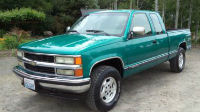
1990 Silverado 1500 5.7l Idles but will stall when I hit the gas


Thread Starter
CF Beginner
Joined: Oct 2022
Posts: 10
Likes: 0
 1990 Silverado 1500 5.7l Idles but will stall when I hit the gas
Hey everyone,
I have a 1990 Silverado 1500 with a 5.7l engine.
I'm having trouble getting it to run properly. It will start and idle fine, I can slowly feather the rmps up and it won't stall, but when I hit the gas for a normal acceleration, it stalls and dies.
I have replaced the following:
Fuel Pump
Fuel Filter
Throttle Position Sensor
Spark Plugs
Checked the distributor
Checked for vacuum leaks, but not certain I checked everything.
is there a good way to clean the injectors to make sure I'm getting enough gas?
Any suggestions would be appreciated!
thanks in advance!
I have a 1990 Silverado 1500 with a 5.7l engine.
I'm having trouble getting it to run properly. It will start and idle fine, I can slowly feather the rmps up and it won't stall, but when I hit the gas for a normal acceleration, it stalls and dies.
I have replaced the following:
Fuel Pump
Fuel Filter
Throttle Position Sensor
Spark Plugs
Checked the distributor
Checked for vacuum leaks, but not certain I checked everything.
is there a good way to clean the injectors to make sure I'm getting enough gas?
Any suggestions would be appreciated!
thanks in advance!

CF Veteran

Joined: May 2011
Posts: 1,578
Likes: 302
From: Central Iowa
Remove the air filter so you can observe the injector spray pattern.
Check it at idle, then manually rev the engine using the throttle linkage. The spray pattern should remain the same but the volume of fuel should increase as the engine speed climbs.
If the volume doesn’t increase, pinch off the return line and check it again. If fuel volume increases normally, it needs a fuel pressure regulator, at which point you can also clean and service the injector body.
The return line can be pinched off at the crossover section from the transmission to the frame, just ahead of the fuel filter. Pinch off the line that’s not attached to the filter.
Check it at idle, then manually rev the engine using the throttle linkage. The spray pattern should remain the same but the volume of fuel should increase as the engine speed climbs.
If the volume doesn’t increase, pinch off the return line and check it again. If fuel volume increases normally, it needs a fuel pressure regulator, at which point you can also clean and service the injector body.
The return line can be pinched off at the crossover section from the transmission to the frame, just ahead of the fuel filter. Pinch off the line that’s not attached to the filter.
Thread Starter
CF Beginner
Joined: Oct 2022
Posts: 10
Likes: 0
Remove the air filter so you can observe the injector spray pattern.
Check it at idle, then manually rev the engine using the throttle linkage. The spray pattern should remain the same but the volume of fuel should increase as the engine speed climbs.
If the volume doesn’t increase, pinch off the return line and check it again. If fuel volume increases normally, it needs a fuel pressure regulator, at which point you can also clean and service the injector body.
The return line can be pinched off at the crossover section from the transmission to the frame, just ahead of the fuel filter. Pinch off the line that’s not attached to the filter.
Check it at idle, then manually rev the engine using the throttle linkage. The spray pattern should remain the same but the volume of fuel should increase as the engine speed climbs.
If the volume doesn’t increase, pinch off the return line and check it again. If fuel volume increases normally, it needs a fuel pressure regulator, at which point you can also clean and service the injector body.
The return line can be pinched off at the crossover section from the transmission to the frame, just ahead of the fuel filter. Pinch off the line that’s not attached to the filter.
thank you so much for this! I'll give it a try! Can the injectors themselves be cleaned or do I have to replace them if they are clogged?
CF Veteran
Joined: May 2011
Posts: 1,578
Likes: 302
From: Central Iowa
You can also pulse them by providing direct battery power and ground, but if you do this, use a 10 amp fused jumper and don’t pulse them for more than 5 seconds at a time with at least one minute between pulses. These injectors rely on gasoline as a coolant, so pulsing them dry can heat the coils quickly. You only want them open long enough to blast some carb cleaner through them.
Don’t forget safety glasses.
Thread Starter
CF Beginner
Joined: Oct 2022
Posts: 10
Likes: 0
In most cases, They can be cleaned. It usually just requires a soft bristle brush (nylon, old toothbrush, etc) to scrub the nozzles followed up by carb cleaner and compressed air.
You can also pulse them by providing direct battery power and ground, but if you do this, use a 10 amp fused jumper and don’t pulse them for more than 5 seconds at a time with at least one minute between pulses. These injectors rely on gasoline as a coolant, so pulsing them dry can heat the coils quickly. You only want them open long enough to blast some carb cleaner through them.
Don’t forget safety glasses.
You can also pulse them by providing direct battery power and ground, but if you do this, use a 10 amp fused jumper and don’t pulse them for more than 5 seconds at a time with at least one minute between pulses. These injectors rely on gasoline as a coolant, so pulsing them dry can heat the coils quickly. You only want them open long enough to blast some carb cleaner through them.
Don’t forget safety glasses.
Trending Topics
CF Veteran
Joined: May 2011
Posts: 1,578
Likes: 302
From: Central Iowa
Ok, I took your original post to mean it was only the stalling problem, not that it was also starting hard.
What did you check on the distributor?
How many miles are on the engine? Has the distributor recently been replaced?
What did you check on the distributor?
How many miles are on the engine? Has the distributor recently been replaced?
Thread Starter
CF Beginner
Joined: Oct 2022
Posts: 10
Likes: 0
CF Veteran
Joined: May 2011
Posts: 1,578
Likes: 302
From: Central Iowa
I just turned the distributor and it’s running better now. Tried to time it with a timing light but when timing it to the timing mark it ran worse. So I’m thinking the chain is probably stretched a bit. Starts, idles and a runs much better but I’m going to replace the distributor anyway. It’s got 300k miles on what likely is the original distributor. I don’t Recall ever changing it and I’ve had it since 96.
The spark control circuit is a tan wire with black stripe, located on the engine harness at the firewall. It’s a single wire connector. It’s often tucked into the wire harness or taped to it, so you may have to open up the harness to find it.
Base timing for the 5.7 is 0* at idle (approx. 600 RPM) when the engine is up to operating temp.
Inspect the old distributor gear for wear and if any is present, try to inspect the gear on the cam as well (easy with a bore scope, but possible with an inspection mirror or decent picture on your phone).
I recommend cleaning the bolt, clamp plate, and surrounding area under the distributor. Grime, dirt, oil etc can interfere with the clamp plate and bolt seating properly and allow them to loosen up as the engine runs.