When you click on links to various merchants on this site and make a purchase, this can result in this site earning a commission. Affiliate programs and affiliations include, but are not limited to, the eBay Partner Network.
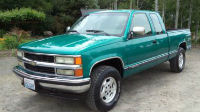
1993 K2500 454 Puzzling noise from timing cover area & pushrod question
Hello - I will try to keep this to the point as there's a lot of details to explain. If you're already thinking timing chain, please hold that thought until you've thoroughly read the sequence of events that led me to this point. Unfortunately this is more of a novel than I wanted it to be, but details do matter.... or so I'm told.
A few weeks ago, a customer towed in their pickup with a crank but no start. Initially, it sounded to me like a few teeth on the flex plate had chipped off because the engine would crank normally for a second and then sounded like the starter was slipping, then start cranking normally again. Although I did find the armature shaft on the starter to be very loose, I didn't find any chipped or broken teeth on either the starter or flywheel.
Reinstalled the starter (which was later replaced with a new one) and pulled the distributor cap to check play on the shaft. It seemed normal, but cranking with the cap off revealed the rotor would only turn intermittently and barely turned at all when it did. I pulled it to check the gear and it was in good shape, and the cam gear looked good from what I could see looking down in the bore.
So then I'm thinking "Must be timing chain" and pulled the WP and timing cover bolts just so I could get a glance at the chain and gears. Nothing was obvious, but once I had a helper turn the key to crank, I could see the chain was slipping over the cam gear. Once I got it apart, the entire cam gear was basically stripped - all the teeth had been worn down to a point.
Keep in mind that as I'm doing these repairs, extensive cleaning of the external surfaces of the engine is needed. It was absolutely coated in grime/grease. Even after scraping off what I could, the parts being re-used spent at least an hour in our hot wash to be cleaned (at least by my standards - I firmly believe cleanliness is key when it comes to any repair). Everything was torqued to spec and in sequence when appropriate.
So here's the first list of repairs:
1. Cloyes timing chain and gears - turned the crank over by hand 4 times to verify timing marks lined back up with TDC on #1
2. Fel pro timing cover gasket set & oil pan gasket
3) Plugs, wires, distributor cap and rotor
4) Reset base timing to 4* before TDC per the sticker on the air filter housing
5) BBB Reman starter
6) Repaired some damaged wiring and vacuum hoses found along the way
After this, I disabled the ignition coil and cranked the engine twice in 10 second increments to prime the oil system (don't have the tool that reaches down the distributor bore). It then fired up almost immediately and I let it run for about 30 seconds (this was before I filled it with antifreeze - I wanted to make sure there were no problems that would mean pulling the cover right back off) - it sounded fine.
I filled it up with antifreeze and started it to let it run up to temp at idle, but this time there was a very noticeable miss and I could hear tappet noise from under the driver side valve cover. I pulled the valve cover and ran the engine briefly - all the rockers were getting oil but I could see play in the exhaust rocker on #1. I shut the engine off and rotated it until the exhaust rocker was opening the valve - it didn't take long for the pressure to bleed down the lifter.
Two weeks later, the customer agrees to lifters and a new cam - the truck sat the whole time. As I'm driving it back into the shop, I notice it's running much rougher and feels like it's got a hard miss on at least 2 or 3 cylinders. After the intake and valve covers were off, I found 3 pushrods that had not only bent but also broke the bottom 3" or so (I've still got them so I'll try to get a pic posted tomorrow). I was able to use a magnet to fish the remains of the pushrods out of the bottom of the oil pan (more on that in a moment).
So, here's the 2nd list of repairs:
1. Cam, lifters, and pushrods (I'll have to double check the brands - if you're curious, the cam bearings were in surprisingly good shape - there were no indications of bearing damage - I verified this using an inspection camera and mirror in order to see the whole surface - so they were not replaced).
2. Fel-pro intake & throttle body base gaskets
3. Replaced all vacuum hoses, cleaned PCV valve, and repaired wiring as necessary
4. Fel-pro valve cover gaskets
With the 2nd round of repairs, I didn't completely remove the oil pan. Dropping the front diff was a genuine pain (had serious problems getting the mounts to line up correctly) the first time and since I'd already replaced the oil pan gasket, I removed the bolts and let the pan "hang," leaving only the back 2 bolts in a few threads so the front end rested on the diff and I could get the timing cover off.
The lifters were soaked in engine oil for 2 days prior to installation and assembly lube was used on the cam. Again, I disabled the coil and cranked the engine in 2 ten second increments to prime the oil system.
I followed the cam break in procedure per the manufacturer, changed the oil and went for a test drive. I verified ignition timing when I got back, went for one more test drive and parked it as it seemed the engine was running fine.
The next day, my boss takes it for a drive and barely makes it back (about 4 miles on the highway round trip). He said it seemed like the ignition coil was going bad. I verified this wasn't the case - it had good, strong spark at the coil and at the plugs.
So, here's where I'm at now -
The engine is running but it's got a vibration/shake and noise coming from the timing cover area through all RPM ranges - to the point that the knock sensor is picking it up and the PCM is retarding the timing to compensate. Listening with my stethoscope, it's very clearly coming from the bottom end of the timing cover/front end of the oil pan. It is most clear if I place my stethoscope on the front lip of the oil pan where it meets the timing cover, but can barely be heard if I listen from the top end of the cover or 6" back on the oil pan.
It sounds just like a rocker hitting the inside of the valve cover but that is not the source. Although I've never heard spark knock, piston or wrist pin slap in person (watched videos but we all know that's not the same), I don't think those are the source either.
Finally, my questions:
1) Is it possible the harmonic balancer is the source of the noise? I do think it needs replaced because there's a decent amount of rubber material missing from the back side. It does have some wobble but there's no witness marks to indicate the balancer is hitting or rubbing on anything.
2) What would cause ONLY the intake valve pushrods to bend? I'll get a pic up ASAP, but once I had them all on the bench, it was so odd to me that only the intake pushrods bent (including the 3 that broke).
I dropped the pan again yesterday. I was convinced the crankshaft was responsible for the noise because I could only hear it at the bottom end of the timing cover - my boss and I thoroughly inspected everything on the bottom end but couldn’t see anything wrong. I even pulled a couple of main caps - although a little scored, still didn’t see anything that explained the noise. I looked inside the exposed portion of the timing cover using a mirror and inspection camera but not a sign of anything hitting.
Let it sit for the night to think on it. Today I figured I’d better pull the timing cover too because it would be foolish to be this close and not do it. That’s when I found this...
So I checked the replacement gear and chain set. It’s a double roller chain set which does work for this engine, but what I didn’t notice (or maybe wasn’t worried about) is it sticks out further than the original gears by 3/16” - with the chain it was about 1/4” - I think if it hadn’t of been for the gasket adding 1/16” the cover would’ve been tight against the new set. I’ve got a replacement single row chain set coming tomorrow.
The only thing left to figure out is how only the intake pushrods were bent....
It’s been a while but I figured I should wrap this up.
I never did figure out why ALL the intake push rods bent, but something was definitely wrong. I noticed after I put the correct timing set on that there was A LOT of valve train noise - much more than there should’ve been for a new cam and lifters. It was most obvious from the right head So I removed the valve cover and fired it up - the #6 exhaust and both #8 lifters seemed to be starving for oil and causing slack - there was hardly any oil reaching the rockers. By comparison, all the other lifters/pushrods were shooting oil all the way to the fender.
It was running otherwise good but you could tell it was missing on those cylinders. I thought maybe some debris had collected in the galleys that fed those lifters, so I tried adding sea foam to the oil and drove it to get the temp up, then when I got back, revved it at 2500-3000 for a solid 5 minutes hoping that would do the trick. But no such luck.
I had to move on to other things, so it sat for a while. Unfortunately I didn’t get the chance to resolve it - our customer needed the truck so they decided to put a Jasper reman in it. However, before we sent the core back to them, I took a little time to pull the heads just outta curiosity.
It’s interesting how a non-interference engine managed to find some interference... this is on #6 - the only cylinder that showed signs of this - yet, the valve isn’t bent.
Interesting read. I would think the only thing which would cause all the intakes to get kinked and not exhaust would be valve timing. Don't know specifics on this engine but would assume that when the cam gear stripped initially it put intake in contact with piston but not exhaust. Last pic appears to be the contact evidence. So the mystery to me is how it seemed to run at all after the push rods/potential valves where kinked? The one experience I have with timing chain slip was catastrophic death of engine immediately so I've assumed that's the way these failures happen. Maybe it's not always catastrophic death? maybe it's possible to contact/kink valves/pushrods slightly and once not straight it's just a matter of time before they seize/break/bend more - don't know. maybe someone else has different experience.
It seems either that or you put something together wrong somehow but seems you know what you are doing.
There’s quite a bit of history on this truck. When it was new and only had like 20k on it, the engine was rebuilt by the local GM dealer due to a factory defect (can’t remember exactly what - this was second hand info from my boss who knows the original owner). The rebuilt engine had about 170k on it when it came to me for the no start.
Almost every manufacturer today uses interference engines (instant death when timing chain/belt jumps) but the GM big blocks like this one were non-interference, meaning even with a valve fully open, it should clear the piston at TDC, but the ignition timing being too far advanced for too long could have caused the intake rods to bend.
As for the clash on the #6 exhaust, I suspect the valve springs were weak due to age/mileage. Then the new lifter, whether defective or clogged up with debris, didn’t allow pressure to bleed off correctly, and so the valve opened further than it should have and they hit. But I won’t be able find out for sure since I didn’t get the chance to further diagnose it.






 1993 K2500 454 Puzzling noise from timing cover area & pushrod question