


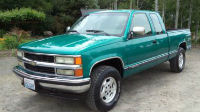
Throttle hesitation please help


Thread Starter
CF Beginner
Joined: Nov 2019
Posts: 27
Likes: 1
 Throttle hesitation please help
My truck has been randomly acting up lately. When stepping on the throttle it doesn't get up and go like normal. It is going to about 30 mph and the rpms would be at 2500 which is not normal at all for my truck haha, but any suggestions on what it could be? I have a video of it acting up in park with the pedal on the floor and the same results happen but i dont know how to post videos on this forum. Any suggestions would be greatly appreciated.
oh and there is no check engine light.
oh and there is no check engine light.
Last edited by 1998ChevySilveradok1500; Apr 24, 2020 at 6:17 PM.

CF Active Member
Joined: Jul 2018
Posts: 134
Likes: 12
Hard to say, could be a lot of things but always best to check basics first - fuel pressure and timing. https://www.chevytalk.org/fusionbb/s...php?tid/253427
also. Did it start acting up after filling up? Do anything recently to truck? etc.
also. Did it start acting up after filling up? Do anything recently to truck? etc.
Thread Starter
CF Beginner
Joined: Nov 2019
Posts: 27
Likes: 1
Hard to say, could be a lot of things but always best to check basics first - fuel pressure and timing. https://www.chevytalk.org/fusionbb/s...php?tid/253427
also. Did it start acting up after filling up? Do anything recently to truck? etc.
also. Did it start acting up after filling up? Do anything recently to truck? etc.
oh and the whole distributor is new.
CF Active Member
Joined: Jul 2018
Posts: 134
Likes: 12
Wow, you’ve tried a lot of things. Another thing is to check/clean the grounds. Funny stuff can happen with poor grounds as signals to ECM can get messed up. There are 3 or 4 of them but not sure where on this year. On older years one on firewall, firewall to engine, CTS housing, battery to fender. There are others here who know a lot more than I do on this year, so hopefully someone who knows can answer.
My experience on stuff like this is either you throw parts at it until you get tired of that or happen to hit the right thing. Or, you get something to datalog and try to capture what the ECM sees when the problem occurs. If you have laptop and are inclined you can use TunerPro and a cable from someone like moates. About $100. There are also turnkey units which I have no experience.
on the parts roulette front - I didn’t notice a knock sensor on your list. Reasonable cheap and easy. I had a knock sensor go back once which would throw burst of knocks counts which would cause a studder on accel.
Good luck,
FWIW - you may get more responses to initial post if you include more of what you’ve done, provides people with more of a puzzle than a general “ it’s hesitating” sort of post.
My experience on stuff like this is either you throw parts at it until you get tired of that or happen to hit the right thing. Or, you get something to datalog and try to capture what the ECM sees when the problem occurs. If you have laptop and are inclined you can use TunerPro and a cable from someone like moates. About $100. There are also turnkey units which I have no experience.
on the parts roulette front - I didn’t notice a knock sensor on your list. Reasonable cheap and easy. I had a knock sensor go back once which would throw burst of knocks counts which would cause a studder on accel.
Good luck,
FWIW - you may get more responses to initial post if you include more of what you’ve done, provides people with more of a puzzle than a general “ it’s hesitating” sort of post.

CF Veteran

Joined: May 2011
Posts: 1,578
Likes: 302
From: Central Iowa
My truck has been randomly acting up lately. When stepping on the throttle it doesn't get up and go like normal. It is going to about 30 mph and the rpms would be at 2500 which is not normal at all for my truck haha, but any suggestions on what it could be? I have a video of it acting up in park with the pedal on the floor and the same results happen but i dont know how to post videos on this forum. Any suggestions would be greatly appreciated.
oh and there is no check engine light.
oh and there is no check engine light.
Given the list of parts already replaced, especially without any codes, you need to determine if it’s an electrical or mechanical problem.
With the engine at operating temp, check vacuum. Ideally it will be in the 18-20 in-Hg range with a steady needle, but as low as 15 is acceptable. Elevation does affect vacuum, so for every 1,000 feet above sea level, subtract 1 in-Hg of vacuum to determine a proper reading.
The needle should be steady. 2-3 in-Hg fluctuations indicate a few issues but nothing that the PCM can’t compensate for. Excessive fluctuations (5 in-Hg or more) indicate breathing/sealing problems of a mechanical nature.
At 2,000 RPM the vacuum should drop momentarily and then recover. If it recovers momentarily or doesn’t recover at all (steady drop), there’s a restriction in the intake or exhaust. When you let off the throttle (suddenly so the throttle plate snaps shut), it should jump (usually it maxes out the gauge) and then return to the idle reading.
The results of the vacuum test will tell you where to focus your efforts.
Thread Starter
CF Beginner
Joined: Nov 2019
Posts: 27
Likes: 1
So it’s acting like it’s lacking power? Is there any popping or backfiring to indicate lean/rich conditions?
Given the list of parts already replaced, especially without any codes, you need to determine if it’s an electrical or mechanical problem.
With the engine at operating temp, check vacuum. Ideally it will be in the 18-20 in-Hg range with a steady needle, but as low as 15 is acceptable. Elevation does affect vacuum, so for every 1,000 feet above sea level, subtract 1 in-Hg of vacuum to determine a proper reading.
The needle should be steady. 2-3 in-Hg fluctuations indicate a few issues but nothing that the PCM can’t compensate for. Excessive fluctuations (5 in-Hg or more) indicate breathing/sealing problems of a mechanical nature.
At 2,000 RPM the vacuum should drop momentarily and then recover. If it recovers momentarily or doesn’t recover at all (steady drop), there’s a restriction in the intake or exhaust. When you let off the throttle (suddenly so the throttle plate snaps shut), it should jump (usually it maxes out the gauge) and then return to the idle reading.
The results of the vacuum test will tell you where to focus your efforts.
Given the list of parts already replaced, especially without any codes, you need to determine if it’s an electrical or mechanical problem.
With the engine at operating temp, check vacuum. Ideally it will be in the 18-20 in-Hg range with a steady needle, but as low as 15 is acceptable. Elevation does affect vacuum, so for every 1,000 feet above sea level, subtract 1 in-Hg of vacuum to determine a proper reading.
The needle should be steady. 2-3 in-Hg fluctuations indicate a few issues but nothing that the PCM can’t compensate for. Excessive fluctuations (5 in-Hg or more) indicate breathing/sealing problems of a mechanical nature.
At 2,000 RPM the vacuum should drop momentarily and then recover. If it recovers momentarily or doesn’t recover at all (steady drop), there’s a restriction in the intake or exhaust. When you let off the throttle (suddenly so the throttle plate snaps shut), it should jump (usually it maxes out the gauge) and then return to the idle reading.
The results of the vacuum test will tell you where to focus your efforts.

CF Junior Member
Joined: Jun 2019
Posts: 77
Likes: 14
Out of curiosity, where did you source your new parts? I'm not as familiar with general GM/AC Delco quality, but on a Toyota forum I belong to there is a definite trend of poor quality aftermarket parts like the distributor and coil causing lack of power, bucking, etc. after the engine has warmed up.
Trending Topics
Thread Starter
CF Beginner
Joined: Nov 2019
Posts: 27
Likes: 1
Out of curiosity, where did you source your new parts? I'm not as familiar with general GM/AC Delco quality, but on a Toyota forum I belong to there is a definite trend of poor quality aftermarket parts like the distributor and coil causing lack of power, bucking, etc. after the engine has warmed up.
Last edited by 1998ChevySilveradok1500; May 1, 2020 at 10:05 AM.

Thread
Thread Starter
Forum
Replies
Last Post
98Silverado1500
Silverado, Sierra & Fullsize Pick-ups
1
Aug 3, 2012 7:25 AM