


Ac won't kick on


Thread Starter
CF Beginner
Joined: Jun 2024
Posts: 2
Likes: 0
From: Illinois
 Ac won't kick on
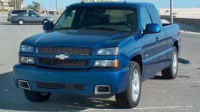
My son's 2000 Chevy Silverado's air compressor will not kick on.We have put a gauge on it from a refill can of refridgerant and it says it was in the green zone. We have replace both low and high pressure ports. When we replaced the low the compressor kicked on and worked for a day or 2 and then stopped again. We replaced the High pressure side and no change. The compressor kicks on and cools when you jump the AC relay out with a piece of wire. We are curious as to what other issues we could have that would stop it from engaging with what we've already done. Could it be voltage issue with pressure switches wiring plug and if so should it be at 12vdc? Any other info would be greatly appreciated by myself and my son since it's his truck. Mid to high 90's already in central Illinois. 🥵🥵🥵
Last edited by GraniteRam16; Jun 17, 2024 at 9:05 PM.


CF Senior Member


Joined: May 2010
Posts: 587
Likes: 124
From: Maryland
First off, get a real set of HVAC gauges so you can monitor both the high pressure and low pressure sides of the HVAC system at the same time. The gauges on those cans of refrigerant are notoriously inaccurate.
If there is not enough refrigerant in the system, the compressor will not engage because the low pressure switch will not close. If there is too much refrigerant in the system, the compressor may not engage because the high pressure switch has opened.
You may have a leak in the system someplace. You mentioned that you replaced the low and high pressure ports. Those might not be tight enough or the new ones could be defective.
These systems are filled by weight of refrigerant and not by pressure. The only way to accurately recharge them is to recover the refrigerant present in the system, evacuate the system using a vacuum pump for 30 to 60 plus minutes and then see if it holds vacuum for at least 15 minutes, and then add the appropriate amount of refrigerant by weight.
Good Luck!
If there is not enough refrigerant in the system, the compressor will not engage because the low pressure switch will not close. If there is too much refrigerant in the system, the compressor may not engage because the high pressure switch has opened.
You may have a leak in the system someplace. You mentioned that you replaced the low and high pressure ports. Those might not be tight enough or the new ones could be defective.
These systems are filled by weight of refrigerant and not by pressure. The only way to accurately recharge them is to recover the refrigerant present in the system, evacuate the system using a vacuum pump for 30 to 60 plus minutes and then see if it holds vacuum for at least 15 minutes, and then add the appropriate amount of refrigerant by weight.
Good Luck!
Thread Starter
CF Beginner
Joined: Jun 2024
Posts: 2
Likes: 0
From: Illinois

CF Beginner
Joined: Jun 2024
Posts: 2
Likes: 0
My son's 2000 Chevy Silverado's air compressor will not kick on.We have put a gauge on it from a refill can of refridgerant and it says it was in the green zone. We have replace both low and high pressure ports. When we replaced the low the compressor kicked on and worked for a day or 2 and then stopped again. We replaced the High pressure side and no change. The compressor kicks on and cools when you jump the AC relay out with a piece of wire. We are curious as to what other issues we could have that would stop it from engaging with what we've already done. Could it be voltage issue with pressure switches wiring plug and if so should it be at 12vdc? Any other info would be greatly appreciated by myself and my son since it's his truck. Mid to high 90's already in central Illinois. 🥵🥵🥵

CF Junior Member
Joined: Jul 2023
Posts: 88
Likes: 28
From: Dallas, TX
Ok, so let's think about this logically. If it works when you override the relay, then I'd start by testing the coil terminal for that relay. Because a relay operates on the principle of a small coil getting energized which activates a mechanical switch, through which the load voltage travels to power said load (in this case, the compressor clutch).
So if I remember correctly, voltage travels from pin 30 to pin 87 for the coil. So what you want to do is start tracing voltage. With the AC button off, check voltage at that pin, make sure there's no voltage (trace mV is fine, you just want to make sure you're not reading ~12v). Then turn the AC button on and check voltage again. If you're not getting voltage, start tracing further back. You probably have a bad wire. Potentially a bad ground, especially in the rust belt there. One of the things I have done is go through and unbolt every ground I could find, clean the connector and bolt/surface with a wire wheel on a drill and snug back down. Bad grounds are a notoriously common source of electrical-related issues, particularly on vehicles starting in the mid-late 90's as PCM's et al got more complex.
So if I remember correctly, voltage travels from pin 30 to pin 87 for the coil. So what you want to do is start tracing voltage. With the AC button off, check voltage at that pin, make sure there's no voltage (trace mV is fine, you just want to make sure you're not reading ~12v). Then turn the AC button on and check voltage again. If you're not getting voltage, start tracing further back. You probably have a bad wire. Potentially a bad ground, especially in the rust belt there. One of the things I have done is go through and unbolt every ground I could find, clean the connector and bolt/surface with a wire wheel on a drill and snug back down. Bad grounds are a notoriously common source of electrical-related issues, particularly on vehicles starting in the mid-late 90's as PCM's et al got more complex.
CF Senior Member
Joined: May 2010
Posts: 587
Likes: 124
From: Maryland
Another thing to remember is that when you turn the AC on, the PCM commands the AC compressor to engage by completing the ground side of the relay's control circuit. In other words, the grounds are switched on and off while the power side is always hot.
Trending Topics

CF Pro Member
Joined: Mar 2024
Posts: 668
Likes: 99
From: Huntsville, AL
I’ve worked on home and auto A/C systems for decades, and something that concerns me is you indicate you don’t have proper gauges and are relying on the gauge on a refill can. You then mentioned replacing both high and low side valves.
If you replaced either of those valves on the charging ports, the system would lose all refrigerant. Did you rent/buy/borrow a set of r134a gauges and a vacuum pump to pull a vacuum on the system, and remove all the air and moisture that contaminated the system? This absolutely must be done before introducing any refrigerant. You can’t charge a system that has air in it.
If you didn’t pull a vacuum, the accumulator is probably ruined by now, and you need to replace it. Then pull a vacuum and refill the system again, with the specified amount of refrigerant. Not sure off the top of my head what the weight is for the 2000. I think my 1996 uses something like 34 ounces.
Places like Autozone ‘rent’ gauges and vacuum pumps, and refund your card when you return the equipment.
Without high and low side gauges, it is impossible to know what the system is doing. There are typically high and low pressure cutoff switches that prevent the clutch from engaging if the pressure is too,high or too low. If you forced a full charge into a system with air in it, it’s likely got too high a pressure, and the high pressure cutoff is engaged. And if you didn’t pull a vacuum, you could need to replace the accumulator and orifice tube.
If you replaced either of those valves on the charging ports, the system would lose all refrigerant. Did you rent/buy/borrow a set of r134a gauges and a vacuum pump to pull a vacuum on the system, and remove all the air and moisture that contaminated the system? This absolutely must be done before introducing any refrigerant. You can’t charge a system that has air in it.
If you didn’t pull a vacuum, the accumulator is probably ruined by now, and you need to replace it. Then pull a vacuum and refill the system again, with the specified amount of refrigerant. Not sure off the top of my head what the weight is for the 2000. I think my 1996 uses something like 34 ounces.
Places like Autozone ‘rent’ gauges and vacuum pumps, and refund your card when you return the equipment.
Without high and low side gauges, it is impossible to know what the system is doing. There are typically high and low pressure cutoff switches that prevent the clutch from engaging if the pressure is too,high or too low. If you forced a full charge into a system with air in it, it’s likely got too high a pressure, and the high pressure cutoff is engaged. And if you didn’t pull a vacuum, you could need to replace the accumulator and orifice tube.
Last edited by jfmorris; Jul 3, 2024 at 11:29 PM.

Thread
Thread Starter
Forum
Replies
Last Post

