When you click on links to various merchants on this site and make a purchase, this can result in this site earning a commission. Affiliate programs and affiliations include, but are not limited to, the eBay Partner Network.
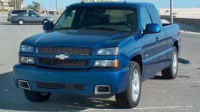
OK so I have a 2002 Chevy Silverado 2500 HD and I’m having a problem getting it to start. When I turn the key nothing happens. lights on the dashboard light up. it’s not throwing any codes and I’ve already reset the security system. The only way I can get the truck to start is if I jump the starter relay to the battery. I’ve replaced the ignition switch, the ignition housing, the starter and I’ve checked all of the fuses and relays. Any help would be very much appreciated.
Note that in the wiring diagram (end of post) there are several connections in the ignition switch circuit and the coil side of the relay is the last in line. These trucks are known for connector problems, so any one of them could be at fault.
1) Pull the starter relay and use a test light to jump pins 85 & 86 in the fuse block - this will replace the relay coil as the load.
2) Turn the key to crank - if it doesn’t light, try again except go directly to battery ground with the test light. Make sure to check both pins 85 & 86 in this step because the diagram doesn’t specify which pin is from the switch.
3) If it lights, connect the test light to battery positive and check the other pin - if it doesn’t light or is very dim, the ground circuit is open or has high resistance and needs further inspection.
4) If the ground circuit is OK, check for power at the crank fuse in the left side fuse block in the dash while turning the key to crank. The door latch pin makes a good ground for the test light. If power is present and the fuse is good, check for power at the transmission (or clutch) safety switch.
The further downstream you get power narrows down the problem area of the circuit. Power into the trans safety switch but not out of it means the switch is faulty OR the trans isn’t fully engaging park.
You can also shift to neutral and attempt to crank to test the switch.
Note that around this time GM was utilizing what was basically hot glue to seal the connections at the trans switch (though I can’t recall if it was still in practice by 2002) - if it seems impossible to remove the connectors, use a heat gun to warm them up and try again. Replacing the switch will also require replacing the connectors.
If you’re unfamiliar with wiring diagrams, the section where the circuit splits is dependent upon a manual or automatic transmission, each path being marked by A/T or M/T respectively.





 Ignition problems