When you click on links to various merchants on this site and make a purchase, this can result in this site earning a commission. Affiliate programs and affiliations include, but are not limited to, the eBay Partner Network.
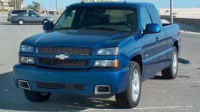
I am currently having issues with my 2006 Chevy Silverado 5.3L V8. It has approximately 220k miles. When I start the truck the oil pressure is fine. After driving for a while the oil pressure drops down all the way to the red while idling. There isn't any noises coming from the engine. Once I begin driving, the oil pressure jumps back up to the 35 range. I come to a stop and it drops back down in the red.
I did put the Lucas oil stabilizer in it and it ran good for about a month. Then it happened again. I do have an oil pan gasket leak. Not sure if that adds to the problem. I changed the oil sensor gauge and still having the same problem. Anyone run into similar issues? What could the problem be?
#1 make sure you are UNDER THE MAX LINE WHEN YOUR ENGINE IS HOT, under it visibly. this means when cold you should be say 1/2 into the hash marks OR LESS. that's a max fill line not "normal" line.
#2 it's supposed to do that. your oil filter has a ball that holds pressure (say, less than 60 on rev) until the engine runs a while and it drops (say, 40, a little higher during revs)
#3 the dipsick is the original OEM dipstick for your VIN right? if you think the dipstick was replaced (looks too new / different from photos on other same model cars): check it against a know good one (you may have a bogus fill line)
USE THE CORRECT OEM OIL FILTER
#3 you have not listed any oil pressure data
Last edited by 2001 chevy silverado; Jul 22, 2021 at 5:14 PM.
to the op
when the oil is cold the viscosity is higher so the oil pressure will be higher also.
an oil pump is a positive displacement pump....the faster the pump is turned the higher the volume of oil pumped....this pressure is controlled by an oil pressure relief valve in the oil pump.
to high a pressure will wash out the bearings so max pressure must be limited.
to create pressure, you need restriction. if the bearing clearances are to large due to wear; the oil pressure will be lower.
you will most likely see lower oil pressure at idle, oil warm. The question is.....is this due to a worn oil pump or worn bearings? Yes, verify proper oil level and viscosity.
you can put a master gauge and verify oil pressure....min spec is 10psi per 1000 rpm until the pressure relief valve opens. If the pressure is confirmed low I have listed 2 reasons. You can either fix the problem or run a thicker oil.
I would look into maybe a weak oil pump or the o-ring pick up tube. I have an 04 and jus went ahead and installed a new pump and o-ring jus for the hell of it. I wasn’t losing pressure, my gauge would fluctuate a lil.
Hello; To the OP. A couple of months ago my gauge began to do the opposite. I noted the gauge was pegged beyond the top number-all the way to the right. I turned off the engine and then moved to key to the power on position but did not start the engine. The gauge was showing near 60 psi with the engine off. When I started the engine it pegged again. Been running it that way for weeks now.
Stopped by a shop and the owner suggested the sending unit. I have not tried to replace it.
My Silverado is a 2004 with the 4.8 V8 and has about 72,000 miles.
When still under warranty (I bought it new) the gauge cluster went wonky. I wonder about that.
In the old days vehicles had direct reading mechanical gauges. I have such a gauge but am not sure where to tap into an oil port.
Please tell me how high oil pressures washes out the bearings.
Hello; Yes to this. It is the oil pressure which cushions between the big end of the connecting rods and the crankshaft journals. Not having enough pressure is a potential problem. Many years ago I restored a 1963 Oldsmobile Cutlass. The oil pump was external to the V8 engine. Among other engine work done was to modify that oil pump. Was merely a slightly longer body with a slightly longer pump gear. I picked a near stock pressure relief spring so had high volume with only slightly higher pressure. I could have picked a stronger spring to get higher pressure. 1963 Cutlass
You wrote that "high oil pressure washes out bearings".
I asked: "how does high oil pressure wash out bearings?
BTW: it is the rotation of the shaft in the presence of sufficient oil Volume that creates the oil cushion - not the oil pressure. As the shaft rotates a hydraulic 'wedge' of oil is created and that is what supports the shaft away from the bearing surface. Even splash lubrication, with no pump and so zero oil pressure, is adequate - so long as sufficient oil is supplied to the bearing to allow the hydraulic wedge of oil to be created.
Originally Posted by sk47
Hello; Yes to this. It is the oil pressure which cushions between the big end of the connecting rods and the crankshaft journals. Not having enough pressure is a potential problem. Many years ago I restored a 1963 Oldsmobile Cutlass. The oil pump was external to the V8 engine. Among other engine work done was to modify that oil pump. Was merely a slightly longer body with a slightly longer pump gear. I picked a near stock pressure relief spring so had high volume with only slightly higher pressure. I could have picked a stronger spring to get higher pressure. 1963 Cutlass
You wrote that "high oil pressure washes out bearings".
I asked: "how does high oil pressure wash out bearings?
BTW: it is the rotation of the shaft in the presence of sufficient oil Volume that creates the oil cushion - not the oil pressure. As the shaft rotates a hydraulic 'wedge' of oil is created and that is what supports the shaft away from the bearing surface. Even splash lubrication, with no pump and so zero oil pressure, is adequate - so long as sufficient oil is supplied to the bearing to allow the hydraulic wedge of oil to be created.
Hello; I follow what you say and cannot nor do I wish to refute it. I have a couple of B&S push lawn mowers which live well with splash lubrication. It works for sure. I suspect there is either a limit to splash lubrication or perhaps an advantage to having an oil pump. With an engine having an oil pump you wind up having both pressure and volume. Sort of like HP & torque in a way. If you have one the other is present.
I will think on this. I suppose part of the thinking over the decades is based on the fact it is simple enough to measure oil pressure over actual volume. We motor heads have become accustomed to looking for oil pressure as the critical measure. Never too old to rethink. Thanks.





 Oil Pressure low when Idling