When you click on links to various merchants on this site and make a purchase, this can result in this site earning a commission. Affiliate programs and affiliations include, but are not limited to, the eBay Partner Network.
I'm actually pretty lost on this AC system. Once I think I have it figured out, I get thrown for another loop.
As best I can tell, my AC system has 2 high pressure switches? I was under the impression that there would be only one. I have one mounted on the back of my compressor (connector shown):
And there is another on the discharge line (connector shown):
HVAC really isn't my strong suit, so hopefully I'm just being an idiot with this lol but can someone shine some light on this?
Maybe I just figured it out, so hopefully someone can confirm this. I think what was confusing me is that there are 2 high pressure related switches, one being a "high pressure switch" and the other being a "high pressure recirculation switch". What confused me was Rockauto's lazy labeling, calling both of these "high pressure switch" when really that's only halfway accurate. I also forgot that my FSM came in today (digital) so I cracked it open and was able to glean that information that I'm hoping resolves my confusion here.
Maybe I just figured it out, so hopefully someone can confirm this. I think what was confusing me is that there are 2 high pressure related switches, one being a "high pressure switch" and the other being a "high pressure recirculation switch". What confused me was Rockauto's lazy labeling, calling both of these "high pressure switch" when really that's only halfway accurate. I also forgot that my FSM came in today (digital) so I cracked it open and was able to glean that information that I'm hoping resolves my confusion here.
I've never heard of there being two high-pressure sensors, but I'd like to see them. Your pics are not on here.
Just use your pictures on the square to the right of the paper clip, with the mountains and the sun to upload them to the forum. I'm very good with auto A/C systems and am very curious about this.
@oilcanhenry I sincerely appreciate your interest. I guess this forum doesn't allow pictures to be pasted inline the way I did, but I attached them using the "right" method as you described, so hopefully you'll see them now. As stated, there's one on the back of the compressor and another located on the discharge line (below airbox).
Back of compressor Discharge line
Here are a couple of pieced together screen captures from my FSM, explaining how I arrived at this conclusion
Last edited by jw11432; Aug 2, 2023 at 5:08 PM.
Reason: change picture
@oilcanhenry I sincerely appreciate your interest. I guess this forum doesn't allow pictures to be pasted inline the way I did, but I attached them using the "right" method as you described, so hopefully you'll see them now. As stated, there's one on the back of the compressor and another located on the discharge line (below airbox).
Back of compressor Discharge line
Here are a couple of pieced together screen captures from my FSM, explaining how I arrived at this conclusion
Wow,jw11432! I've worked on the old R-12 Freon systems, as well as converting them to use R-134A. Hell, I even installed an entire A/C system in an old girlfriend's F**d Mustang that didn't have even have A/C. But I've never seen an A/C system that had two high-pressure sensors, so I'm gonna find out what's going on with a few questions. This is very intriguing to me as I have never seen such a device before.
What year, make and model is your Chevy? What motor do you have? Are you having any issues with it now? Do you know where your low-side A/C pressure sensor is located? Are you the original owner of your Chevy?
What, if anything, have you done with the A/C system? Is the unknown A/C sensor located near the bottom line from the condenser as appears? Has your air-conditioning ever been worked on previously?
Where do the wires go to from this sensor? What color are they? How many miles do you have now?
Sorry to have to ask you all these questions, but it's mind-boggling to me, as I have never seen this, ever.
-Oilcanhenry
Last edited by oilcanhenry; Aug 2, 2023 at 7:00 PM.
What year, make and model is your Chevy? What motor do you have? - 2002 Silverado 1500 LT Z71 with the 5.3 engine. Now, the engine did come from a newer model with low miles some time ago, but I'm not aware of what year it came from. But I have to assume it was basically just a long block and all accessories, AC included were simply swapped back over, though I cannot verify that. Are you having any issues with it now? - The AC is non-functional at the moment. It evidently has a leak somewhere because the system is nearly bone dry. I hooked up my manifold gauges to see the needles on the gauges not move, so I did the ultimate test of depressing one of the schrader valves and it barely let out a little whisper. My next move is to order all new parts for the entire AC system. Do you know where your low-side A/C pressure sensor is located? - As far as I can tell, my low pressure switch is mounted on the accumulator. That is further confirmed by my FSM and parts availability on Rockauto, judging by the pictures of the sensor's sockets and my own connector matching up (fortunately, the connectors seem to typically have a fairly distinct pattern). Are you the original owner of your Chevy? - I am not. This truck came form my uncle who had it for quite some time as his work truck. Allegedly, when the AC worked, he said that if he used the AC, the cluster gauges would all stop and the only way to rectify the issue was to disconnect the battery, let it sit overnight like that, and all would be fine by morning. I was going to try and troubleshoot this issue but that's when I discovered the AC didn't work at all. My assumption is that it's a bad ground, or perhaps a chewed wire. I did find an old mouse nest under the electrical center under the hood. I saw no chewed wires there, but there was also mouse droppings in the bottom of the airbox as well. I'm thinking there may be some compromised wiring inside the dash, but I won't find that until perhaps this weekend when I get a chance to start dismantling it. What, if anything, have you done with the A/C system? - Nothing other than checking for static pressure and verifying the fuses and relay is good. Is the unknown A/C sensor located near the bottom line from the condenser as appears? - Correct. I'm under the impression that is the discharge line, so my apologies if I'm wrong there, but that is the approximate location. Has your air-conditioning ever been worked on previously? - Not to my knowledge, but I also know very little about its history aside from what I've already divulged. My uncle evidently is not great with vehicles made past the 70's, as anything with sensors and electronics he just throws his hands up and doesn't even bother trying. Where do the wires go to from this sensor? What color are they? - I would need to get back to you on this. I know the wires do fold into a larger harness, but not sure where they go from there, of course. I'll see if I can trace them a bit and then of course also uncover what color the wires are. How many miles do you have now? - I believe there's ~147k miles on the chassis. I was told that the engine had about 50k miles on it when it was transplanted from the newer model, and another source stated that, based on the number on the front of my block (and/or perhaps some other identifying feature) that it was from a vehicle no later than 2007.
I also just happened upon this, since you said you'd never seen this before, making me think there was something wonky going on in my truck, but it could be an issue of terminology causing some understandable confusion for me and perhaps even you as well.
Depending upon the age of the system, there are multiple switches. Here's generally what they are for and where located:
Low Pressure Side - This switch cycles the compressor on a CCOT system and will also completely shut down the system if the pressure gets too low. As the compressor runs and draws down the low side, it will cut off at about 20 lbs, and kick on again around 60 lbs.
High Pressure Side - This switch is usually located on the condenser and kicks on the auxiliary fan. As the pressure builds in the condenser, the auxiliary fan comes on. On some systems, the pressure is read by the ECM and can vary the fan speed. Some are simply on or off.
Rear of Compressor - This is commonly used as a high pressure cutoff switch. If the high side gets to say 400 lbs, the compressor is disengaged to keep from blowing the system apart.
I also just happened upon this, since you said you'd never seen this before, making me think there was something wonky going on in my truck, but it could be an issue of terminology causing some understandable confusion for me and perhaps even you as well.
Depending upon the age of the system, there are multiple switches. Here's generally what they are for and where located:
Low Pressure Side - This switch cycles the compressor on a CCOT system and will also completely shut down the system if the pressure gets too low. As the compressor runs and draws down the low side, it will cut off at about 20 lbs, and kick on again around 60 lbs.
High Pressure Side - This switch is usually located on the condenser and kicks on the auxiliary fan. As the pressure builds in the condenser, the auxiliary fan comes on. On some systems, the pressure is read by the ECM and can vary the fan speed. Some are simply on or off.
Rear of Compressor - This is commonly used as a high pressure cutoff switch. If the high side gets to say 400 lbs, the compressor is disengaged to keep from blowing the system apart.
QUOTE=jw11432;493315]I also just happened upon this, since you said you'd never seen this before, making me think there was something wonky going on in my truck, but it could be an issue of terminology causing some understandable confusion for me and perhaps even you as well.
Depending upon the age of the system, there are multiple switches. Here's generally what they are for and where located:
Low Pressure Side - This switch cycles the compressor on a CCOT system and will also completely shut down the system if the pressure gets too low. As the compressor runs and draws down the low side, it will cut off at about 20 lbs, and kick on again around 60 lbs.
High Pressure Side - This switch is usually located on the condenser and kicks on the auxiliary fan. As the pressure builds in the condenser, the auxiliary fan comes on. On some systems, the pressure is read by the ECM and can vary the fan speed. Some are simply on or off.
Rear of Compressor - This is commonly used as a high pressure cutoff switch. If the high side gets to say 400 lbs, the compressor is disengaged to keep from blowing the system apart.[/QUOTE]
You got it, man! The second one is correct. I'm an old guy and used to seeing mechanical fans installed on the water pump on pickups like my 1998 Chevy K-1500, not the electrical fans these days. Like I said I'm getting old. I was going to let you know what I found out, but you beat me to it, jw11432! LOL!
Now we just have to find out where your leak is, or if your compressor is working properly. With no or little R-134A, it won't operate as the low-pressure sensor won't allow it to do so. Please wear gloves and eye protection anytime you are involved with working with A/C. Back when I was studying to be a mechanic, or automotive technician, before I ended up driving truck for a living, a gal in our A/C unit had something
in the A/C blow up in her face. Luckily it only scarred her up some, but she could have lost an eye or two.
Oh I'm not worried about finding the leak. I'm going to replace every AC component there is: compressor, condenser, evaporator, lines, all sensors. No stone shall be unturned. And obviously I'm replacing the heater core while I'm in there lol
So if that mystery sensor is the one that triggers an aux fan, that means 1 of 2 things: either this whole AC setup came out of the donor truck (because I have only a thermal clutch fan (or mechanical fan)) and this sensor is a vestige of that truck's setup or the aux fan in my truck was removed at some point. But I'm leaning towards the former rather than the latter.
Hey, thanks for taking an interest! It really did help me understand what's going on. So really, I guess I don't actually need that sensor on the discharge line, nor do I need to worry about replacing it. But I would like to trace it to verify that this is in fact what it is. My suspicion is that it goes to the PCM and there is a specific output on it just for an aux fan that I can find by reading the PCM's pinout.
Oh I'm not worried about finding the leak. I'm going to replace every AC component there is: compressor, condenser, evaporator, lines, all sensors. No stone shall be unturned. And obviously I'm replacing the heater core while I'm in there lol
So if that mystery sensor is the one that triggers an aux fan, that means 1 of 2 things: either this whole AC setup came out of the donor truck (because I have only a thermal clutch fan (or mechanical fan)) and this sensor is a vestige of that truck's setup or the aux fan in my truck was removed at some point. But I'm leaning towards the former rather than the latter.
Hey, thanks for taking an interest! It really did help me understand what's going on. So really, I guess I don't actually need that sensor on the discharge line, nor do I need to worry about replacing it. But I would like to trace it to verify that this is in fact what it is. My suspicion is that it goes to the PCM and there is a specific output on it just for an aux fan that I can find by reading the PCM's pinout.
Hit me up if you think you need ANY knowledge of mine at all. I don't envy you for replacing the Evaporator and Heater core. I've done that and it aint easy, digging down under the dash at all, but ya' gotta do what you think is right. And thanks for allowing me what to look for on these newer vehicles.



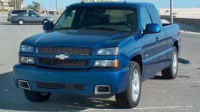


 Two high pressure switches for AC?





 I was going to let you know what I found out, but you beat me to it, jw11432! LOL!