When you click on links to various merchants on this site and make a purchase, this can result in this site earning a commission. Affiliate programs and affiliations include, but are not limited to, the eBay Partner Network.
Good Day, I have a 2009 extended cab LT Silverado 5.3L 4 speed tranny with tow package. It currently has 93K. I have not had any major issues with it so far. We are looking at pulling a smaller RV less than 4K lbs loaded to Alaska next summer from GA, so I am curious as to others thoughts, would they use this truck or trade it in for new one?
That truck is more than capable of pulling a 4,000 pound trailer - at 93k, it’s well under the average mileage.
Recommendations to prepare for the trip -
1) Get the cooling system flushed as well as a new thermostat & pressure cap if you’re not sure how old the existing ones are. Add a water pump if the existing coolant is heavily contaminated.
2) Check fluids in the front/rear axles, transfer case, and transmission - service if needed.
3) Inspect the serpentine belt and tensioner/idlers - replace if needed (it’s recommended to replace the belt and tensioner at the same time - belt component kit are available).
4) Check the steering linkage, ball joints and wheel bearings for play - repair and align as needed. Replace tires too if older than 5 years (there should be a DOT date code on the sidewall - the last 2 digits indicate the year of manufacture).
5) Inspect the lines for the engine/ATF coolers and power steering system for leaks. Repair as needed.
6) Check the driveshaft u-joints for play - replace as needed.
One of the most important things to towing safely is having the trailer brake controller set correctly. Set too low and the trailer can push the truck during stops - set too high and it can jerk everything to a stop sooner than expected.
The gain that’s actually needed depends on the truck/trailer combination, but as a general rule, the heavier the trailer, the higher the gain.
If you’re unsure where to set it, start at 5 and see how it feels. The gain should be set so that you feel a gentle pull from the trailer as you’re applying the brakes.
One of the most important things to towing safely is having the trailer brake controller set correctly. Set too low and the trailer can push the truck during stops - set too high and it can jerk everything to a stop sooner than expected.
The gain that’s actually needed depends on the truck/trailer combination, but as a general rule, the heavier the trailer, the higher the gain.
If you’re unsure where to set it, start at 5 and see how it feels. The gain should be set so that you feel a gentle pull from the trailer as you’re applying the brakes.
Thanks, yes agree, definitely needs tweaked for the situation.
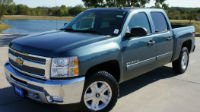
Thought would upload a pic of the truck and RV we will tow to Alaska next year. I am thinking of the doing a full AFM/DOD delete on it. I have been researching on potential issues people are having with new trucks and there can be some gremlins with all this new technology. I have since changed out the receiver to level out the RV.
So, do you think it shouldn't be an issue suspect will be in 3rd most of time out west for sure..... :-)
Thought would upload a pic of the truck and RV we will tow to Alaska next year. I am thinking of the doing a full AFM/DOD delete on it. I have been researching on potential issues people are having with new trucks and there can be some gremlins with all this new technology. I have since changed out the receiver to level out the RV.
So, do you think it shouldn't be an issue suspect will be in 3rd most of time out west for sure..... :-)
If you’re not the original owner, I’d recommend getting a repair history report from a service such as carfax to see if the AFM system has already been repaired.
The dealer can inform you of any repairs done within the GM system but if it’s been serviced at an independent shop, whatever was done won’t be available from the dealer.
You can also get some info about active recalls from the NHTSA - https://www.nhtsa.gov
The AFM system isn’t likely to activate very often during the trip. It’s designed to engage during light load driving and the trailer will likely keep enough load on it to prevent it from turning on.
Have you experienced any problems with the AFM system? If not, I would be cautious about fixing what isn’t broken as it requires head removal to replace the lifters.
If you’re not the original owner, I’d recommend getting a repair history report from a service such as carfax to see if the AFM system has already been repaired.
The dealer can inform you of any repairs done within the GM system but if it’s been serviced at an independent shop, whatever was done won’t be available from the dealer.
You can also get some info about active recalls from the NHTSA - https://www.nhtsa.gov
The AFM system isn’t likely to activate very often during the trip. It’s designed to engage during light load driving and the trailer will likely keep enough load on it to prevent it from turning on.
Have you experienced any problems with the AFM system? If not, I would be cautious about fixing what isn’t broken as it requires head removal to replace the lifters.
Have owned the truck for over 11 years (have repair history before I owned it) and I agree with "Don't fix it if it ain't broke" :-) So far have had no problems with AFM; but I generally only average 6K miles per year and from what I have read it can happen fairly quickly. I don't want be in the middle of nowhere and have it happen. I also agree AFM wouldn't engage much, but from research the lifters can collapse regardless of mode.
I briefly thought about trading it in; but gawd the price of new trucks...... Our 1st house was cheaper than some of these trucks.....
There’s only a couple of ways I can think of to check for potentially failing lifters:
1) Warm the engine up to temp, then pull the valve covers. Crank the engine a few times to build oil pressure again, then stop the engine when the valves for the AFM cylinders (1, 4, 6, 7) are open and watch for the valve springs to immediately push the rods back down (within about 10 seconds). If that happens, those lifters are collapsing.
2) Engine warm and valve covers off, rotate the engine to place the AFM cylinders at TDC compression. Try to move the push rods up and down - there should be no movement/free play. If there is, the lifter is either stuck in a partially collapsed position or the roller is loose or seized.
FYI the engine can be cranked without starting by jumping pins 30 & 87 at the starter relay.
There’s only a couple of ways I can think of to check for potentially failing lifters:
1) Warm the engine up to temp, then pull the valve covers. Crank the engine a few times to build oil pressure again, then stop the engine when the valves for the AFM cylinders (1, 4, 6, 7) are open and watch for the valve springs to immediately push the rods back down (within about 10 seconds). If that happens, those lifters are collapsing.
2) Engine warm and valve covers off, rotate the engine to place the AFM cylinders at TDC compression. Try to move the push rods up and down - there should be no movement/free play. If there is, the lifter is either stuck in a partially collapsed position or the roller is loose or seized.
FYI the engine can be cranked without starting by jumping pins 30 & 87 at the starter relay.





 Towing to Alaska