

6300 pounds of crap with a 5000 pound towing capacity. NOW WHAT. Suggestions welcome.





CF Pro Member

Joined: Aug 2013
Posts: 997
Likes: 21
From: SE MI

The bottom line is you have a weak, semi-floater rear end that is only rated to 4200 lbs. Regearing and/or adding cooling doesn't change that.
What kind of trips are you planning? Short trips at most a few hours, or cross-country treks driving thousands of miles? The biggest problem is heat, and long trips cause things to get much hotter, specifically the transmission and rear axle. Adding a new diff cover with cooling fins would probably be a good idea.
If you re-gear, I'd definitely go with 3.73.
What kind of trips are you planning? Short trips at most a few hours, or cross-country treks driving thousands of miles? The biggest problem is heat, and long trips cause things to get much hotter, specifically the transmission and rear axle. Adding a new diff cover with cooling fins would probably be a good idea.
If you re-gear, I'd definitely go with 3.73.
CF Pro Member
Joined: Aug 2013
Posts: 997
Likes: 21
From: SE MI
You keep writing about HD/non HD. The only difference between the two is the presence of the oil and trans cooler (code K5L). Other than that, there is no difference - all the hardware - engine, transmission, axles, etc, are the same.
And I'm not sure what you mean by "an axle that has a much higher rating with other applications." A 2014 Silverado has a rear axle weight rating of 3950, which is lower than the Suburban's 4200. It's physics - a semifloater can't handle high-torque loads as well as a full floater. You want a real rear axle? The 10.5" full floater in my 2500 Burb is rated to 8600 lbs by AA (if it had dual rear wheels). That's not a typo. My rear axle can carry more weight than your entire truck.
There are a lot more weight ratings to consider than just the "trailer towing capacity." I would NEVER try to tow an 8,000-lb trailer with a half-ton Burb. Heck, and 8600-lb trailer maxes out my 2500 Burb, and it's "rated" to pull 9400 lbs. A half-ton Suburban only has about 1500 lbs of payload. Using the typical 13% trailer tongue weight, and an 8000-lb trailer equals 1,040 lbs of tongue weight. Not much payload left for anything else. Then you have the 4200-lb rear axle weight rating. I can guarantee you'll exceed that number with a trailer that large, even using weight distribution. And if you try to reduce the tongue weight by creatively loading the trailer, then that will increase instability and sway.
Look, you can do whatever you want. I'm just trying to share my experience so that others don't make the same mistakes I did. I had two catastrophic failures of ther rear axle in my '01 Burb. Both times while towing a large RV that only weighed about 7000 lbs, while on vacation. Try explaining to your family why you're spending 4 days in Mitchell, SD staring at a f***ing corn palace instead of the geysers of Yellowstone and Rushmore.
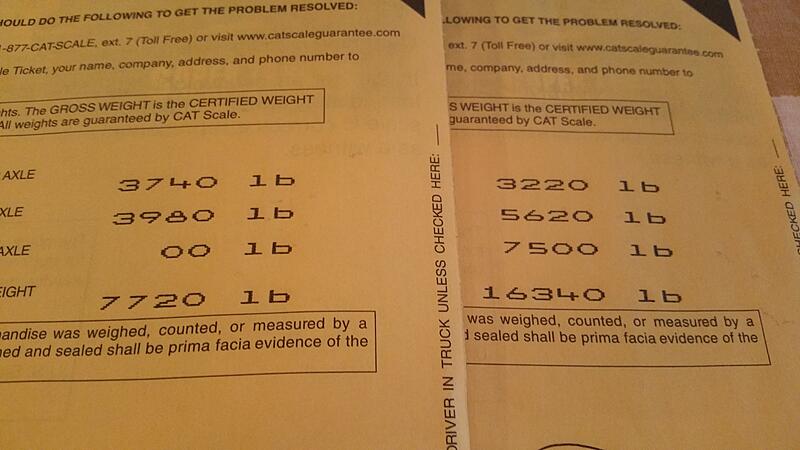
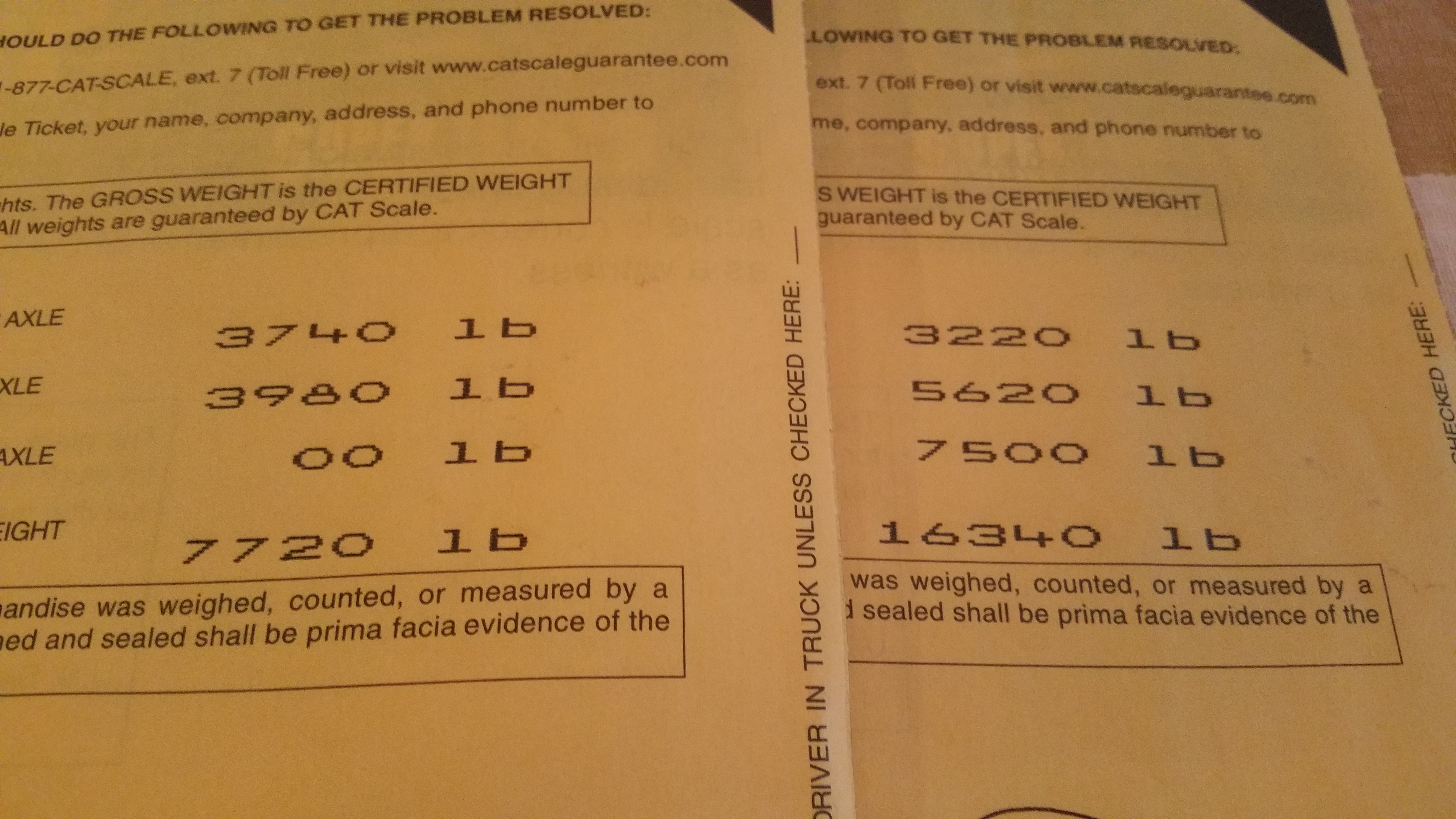
Load up the trailer, load up the family and all of your gear, and drive over to CAT scales and get your weights. Those are the important numbers. Anything else is BS and speculation. Just realize that re-gearing and adding coolers aren't going to do much to improve your towing experience.
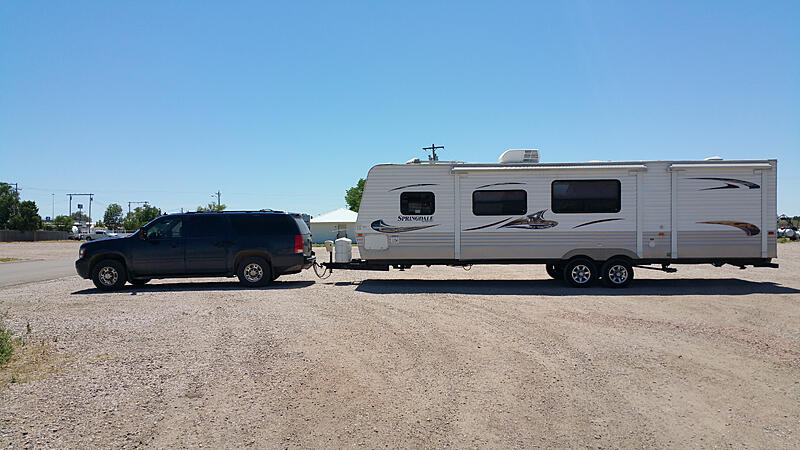
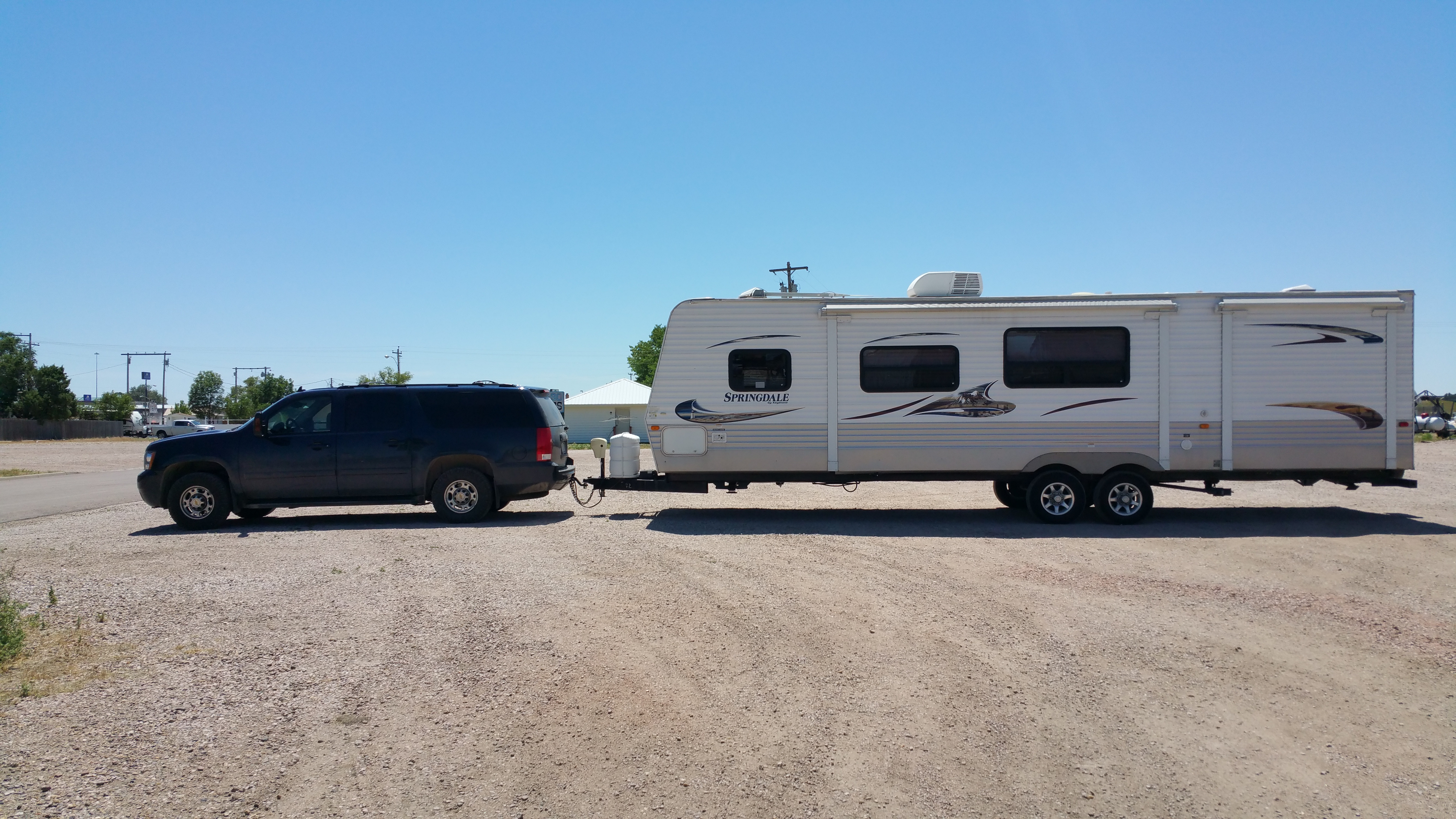
Here are my weights from my trip last year to Yellowstone with this behemoth:
And I'm not sure what you mean by "an axle that has a much higher rating with other applications." A 2014 Silverado has a rear axle weight rating of 3950, which is lower than the Suburban's 4200. It's physics - a semifloater can't handle high-torque loads as well as a full floater. You want a real rear axle? The 10.5" full floater in my 2500 Burb is rated to 8600 lbs by AA (if it had dual rear wheels). That's not a typo. My rear axle can carry more weight than your entire truck.
There are a lot more weight ratings to consider than just the "trailer towing capacity." I would NEVER try to tow an 8,000-lb trailer with a half-ton Burb. Heck, and 8600-lb trailer maxes out my 2500 Burb, and it's "rated" to pull 9400 lbs. A half-ton Suburban only has about 1500 lbs of payload. Using the typical 13% trailer tongue weight, and an 8000-lb trailer equals 1,040 lbs of tongue weight. Not much payload left for anything else. Then you have the 4200-lb rear axle weight rating. I can guarantee you'll exceed that number with a trailer that large, even using weight distribution. And if you try to reduce the tongue weight by creatively loading the trailer, then that will increase instability and sway.
Look, you can do whatever you want. I'm just trying to share my experience so that others don't make the same mistakes I did. I had two catastrophic failures of ther rear axle in my '01 Burb. Both times while towing a large RV that only weighed about 7000 lbs, while on vacation. Try explaining to your family why you're spending 4 days in Mitchell, SD staring at a f***ing corn palace instead of the geysers of Yellowstone and Rushmore.
Load up the trailer, load up the family and all of your gear, and drive over to CAT scales and get your weights. Those are the important numbers. Anything else is BS and speculation. Just realize that re-gearing and adding coolers aren't going to do much to improve your towing experience.
Here are my weights from my trip last year to Yellowstone with this behemoth:
Last edited by intheburbs; Feb 28, 2018 at 10:52 PM.

CF Junior Member
Joined: Feb 2012
Posts: 90
Likes: 3
Here is my thoughts with more meaning. Any vehicle that is towing has limits on what it was designed by the manufacture. With today laws and the amount of scrutiny being placed while investigating any accidents whether who is at fault has severe implications. Lets use this for a example. You are towing a trailer that exceeds the vehicle towing recommendation. You are towing in bad weather saying it is heavy rain. Someone cuts you off and you lose control because of someones elses driving. The police start investigating and look at the weights of the trailer and the weights capability. You can be issued a citation and fined and even found guilty of losing control even tho it was another drivers fault because they cut you off or what ever reason. Insurance will not pay in these cases.
I would never exceed the tow limits of the vehicle I am driving. I am not willing to put my self at risk for what good be a bad outcome. If my Duramax or Suburban or Tahoe couldn't tow the trailer legally then I would look at options to include a rental vehicle that is legal to do so.
I would also refrain from childish remarks. It doesn't solve your problem when folks are trying to give you advice. If you don't like the advice you can alway thank them and move on. I give my advice from real life experiences whether or not I was directly involved. I will also admit I am not the smartest person either but I posse alot of common sense.
For what it is worth, A regear and tranny cooler is what I would do. You can find someone with HP Tuners or EFI Live who can make the changes so your vehicle knows what the new gears are. If I were to do it I would charge what it costs me. About 200 bucks. I have EFI Live and use it for every vehicle I own...
Good Luck on your trip.
I would never exceed the tow limits of the vehicle I am driving. I am not willing to put my self at risk for what good be a bad outcome. If my Duramax or Suburban or Tahoe couldn't tow the trailer legally then I would look at options to include a rental vehicle that is legal to do so.
I would also refrain from childish remarks. It doesn't solve your problem when folks are trying to give you advice. If you don't like the advice you can alway thank them and move on. I give my advice from real life experiences whether or not I was directly involved. I will also admit I am not the smartest person either but I posse alot of common sense.
For what it is worth, A regear and tranny cooler is what I would do. You can find someone with HP Tuners or EFI Live who can make the changes so your vehicle knows what the new gears are. If I were to do it I would charge what it costs me. About 200 bucks. I have EFI Live and use it for every vehicle I own...
Good Luck on your trip.
CF Pro Member
Joined: Aug 2013
Posts: 997
Likes: 21
From: SE MI
So now you're resorting to insults. Classy.
Two points:
6300 dry weight is meaningless, and all seasoned RVers know that. Have you actually weighed it? What does it weigh when fully loaded for a trip? I'd bet you a dollar it comes in between 7000 and 8000 lbs. Then, load up your Suburban with your family and all your gear/luggage, hitch up, and get your rig weighed. If you don't do that, everything else is moot.
I've been towing for over 10 years, 4 different trailers, 25,000+ miles, all over the country including the Rockies. Please, do tell me about all of your extensive towing experience.
One last thing -if you really want to learn about towing - go to rv.net
I'm done with this thread. Time to take my meds.
Two points:
6300 dry weight is meaningless, and all seasoned RVers know that. Have you actually weighed it? What does it weigh when fully loaded for a trip? I'd bet you a dollar it comes in between 7000 and 8000 lbs. Then, load up your Suburban with your family and all your gear/luggage, hitch up, and get your rig weighed. If you don't do that, everything else is moot.
I've been towing for over 10 years, 4 different trailers, 25,000+ miles, all over the country including the Rockies. Please, do tell me about all of your extensive towing experience.
One last thing -if you really want to learn about towing - go to rv.net
I'm done with this thread. Time to take my meds.