


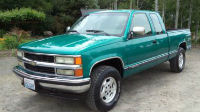
How-where to test fuel pump-press on 89 Cheyenne 350



CF Veteran

Joined: May 2011
Posts: 1,578
Likes: 302
From: Central Iowa

A pump that’s wearing out can produce good pressure but not enough volume, and the inverse is also true.


I'm here for the party


Joined: Feb 2019
Posts: 1,467
Likes: 83
From: Maryland
on top of that theres a little section of rubber hose between the pump and assembly that will crack due to the ethanol in fuel now days. if it cracks it will pump like normal but it will lose pressure at the crack. this can make the engine run lean or even spit and sputter when you try to take off but idle fine
Last edited by Irish_alley; Oct 9, 2021 at 4:32 PM.
CF Veteran
Joined: May 2011
Posts: 1,578
Likes: 302
From: Central Iowa
The hose being referred to is internal to the tank, from the pump outlet to the fitting where it passes through the lid and connects to the line from the tank to the engine.
The only flexible sections of the supply and return lines are at the tank and where they pass from the frame to the engine. Unless a PO “engineered” a fix for a broken section of line, the rest of the lines are steel.
The only flexible sections of the supply and return lines are at the tank and where they pass from the frame to the engine. Unless a PO “engineered” a fix for a broken section of line, the rest of the lines are steel.

Thread Starter
CF Beginner
Joined: Sep 2021
Posts: 19
Likes: 0
Gumby...rather than trying to order all parts and etc that may or not fit to ck my fuel line,,,,would it be possible to just get an air gauge and some rubber hosing and a coupla C clamps and hook up fuel line after the fuel filter? If I place a new fuel filter and come off the outlet of the fuel filter with rubbler hose and C clamps to the gauge I could see pressure with key on right? If it holds about 12 lbs or so then fuel pressure prob ok ...is my thinking wrong on this?
Last edited by Trying2drive; Oct 16, 2021 at 2:47 PM. Reason: double cking spelling
CF Veteran
Joined: May 2011
Posts: 1,578
Likes: 302
From: Central Iowa
Gumby...rather than trying to order all parts and etc that may or not fit to ck my fuel line,,,,would it be possible to just get an air gauge and some rubber hosing and a coupla C clamps and hook up fuel line after the fuel filter? If I place a new fuel filter and come off the outlet of the fuel filter with rubbler hose and C clamps to the gauge I could see pressure with key on right? If it holds about 12 lbs or so then fuel pressure prob ok ...is my thinking wrong on this?
1) An air pressure gauge won’t work to read fuel pressure. The seals inside the gauge will be dissolved by gasoline and will leak. Even if the gas remains within the gauge, the gauge reading will be inaccurate.
2) Placing the gauge at the end of the fuel circuit, without giving the fuel anywhere else to go, will dead head the pump (max out the pumps pressure). There is useful information in checking the dead head pressure but if used with an air pressure gauge, there’s potential for the gauge to burst or the clamps/line to give out. I’ve seen some of these pumps produce 50+ PSI when dead heading and it’s unlikely you’d have any kind of warning that something’s about to give.
3) Checking the system pressure in parallel (using a tee fitting for the gauge) allows you to not only test the pump/supply side of the circuit but also the injectors and regulator/return side. The pump may be fine but an issue with the regulator can just as easily cause the issues you describe, and you’d have to set up a way to test those as well.
The fitting I linked in my earlier post and a fuel pressure gauge are all you need to check pressure. That fitting is available in most national chain parts and/or tool stores (as well as online) either on its own or as part of a test kit.
Thread Starter
CF Beginner
Joined: Sep 2021
Posts: 19
Likes: 0
There’s a couple of problems with the set up you’re describing.
1) An air pressure gauge won’t work to read fuel pressure. The seals inside the gauge will be dissolved by gasoline and will leak. Even if the gas remains within the gauge, the gauge reading will be inaccurate.
2) Placing the gauge at the end of the fuel circuit, without giving the fuel anywhere else to go, will dead head the pump (max out the pumps pressure). There is useful information in checking the dead head pressure but if used with an air pressure gauge, there’s potential for the gauge to burst or the clamps/line to give out. I’ve seen some of these pumps produce 50+ PSI when dead heading and it’s unlikely you’d have any kind of warning that something’s about to give.
3) Checking the system pressure in parallel (using a tee fitting for the gauge) allows you to not only test the pump/supply side of the circuit but also the injectors and regulator/return side. The pump may be fine but an issue with the regulator can just as easily cause the issues you describe, and you’d have to set up a way to test those as well.
The fitting I linked in my earlier post and a fuel pressure gauge are all you need to check pressure. That fitting is available in most national chain parts and/or tool stores (as well as online) either on its own or as part of a test kit.
1) An air pressure gauge won’t work to read fuel pressure. The seals inside the gauge will be dissolved by gasoline and will leak. Even if the gas remains within the gauge, the gauge reading will be inaccurate.
2) Placing the gauge at the end of the fuel circuit, without giving the fuel anywhere else to go, will dead head the pump (max out the pumps pressure). There is useful information in checking the dead head pressure but if used with an air pressure gauge, there’s potential for the gauge to burst or the clamps/line to give out. I’ve seen some of these pumps produce 50+ PSI when dead heading and it’s unlikely you’d have any kind of warning that something’s about to give.
3) Checking the system pressure in parallel (using a tee fitting for the gauge) allows you to not only test the pump/supply side of the circuit but also the injectors and regulator/return side. The pump may be fine but an issue with the regulator can just as easily cause the issues you describe, and you’d have to set up a way to test those as well.
The fitting I linked in my earlier post and a fuel pressure gauge are all you need to check pressure. That fitting is available in most national chain parts and/or tool stores (as well as online) either on its own or as part of a test kit.

Thread
Thread Starter
Forum
Replies
Last Post