When you click on links to various merchants on this site and make a purchase, this can result in this site earning a commission. Affiliate programs and affiliations include, but are not limited to, the eBay Partner Network.
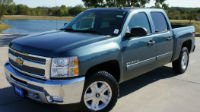
I have a 2011 Chevy Silverado WT with a 4.8L L20 in it. The truck has a pretty serious misfire when looking at the live data of the engine running. It is mostly cylinder 8 but occasionally cylinder 7. I did a compression check on the engine and came up with this :
Cyl - Press
1 - 175
2 - 135
3 - 165
4 - 140
5 - 135
6 - 140
7 - 140
8 - 125
The truck has 227900 miles on it. I did all the maintenance that one might do to visibly worn parts that needed to be changed and even some parts that might have been related to the problems in order to eliminate them as culprits in troubleshooting the issue(s). I have so far replaced all the spark plugs, all spark plug wires and the coils on 7 and 8. I replaced an O2 sensor. I also replaced the crank angle sensor and cam angle sensors. I performed the crank relearn with a diagnostic tool and I replaced all of the injectors with the same part number injectors. I have not replaced the intake manifold gasket yet, I have not pulled the valve cover to watch actuation of the lifters but not sure what i would be looking for other than uniform movement across all cylinders. My engine does not have AFM. It seems to run well at higher rpm and the CEL goes off when driving normally but starts missing when sitting at a light or idling. The traction control lights are related to the missing and also disappear when under load. Could this be a VVT issue? How would I test that? Are there specific codes I should look for? The truck seems to have good power when it revs up and can tow my tractor from the farm to the house (5 miles?) with no power issues at all. It just has a mind of its own when it starts to idle. I've read lots of threads about P0308 or P0307 but have not been able to determine if VVT is being considered as a culprit. So many people focus on AFM that it takes the diagnostics to a different direction. Am i missing something in troubleshooting this issue? Almost everyone recommends plugs, wires and coils which have been changed for the cylinders involved. Anyone have some other suggestions?
I have a 2011 Chevy Silverado WT with a 4.8L L20 in it. The truck has a pretty serious misfire when looking at the live data of the engine running. It is mostly cylinder 8 but occasionally cylinder 7. I did a compression check on the engine and came up with this :
Cyl - Press
1 - 175
2 - 135
3 - 165
4 - 140
5 - 135
6 - 140
7 - 140
8 - 125
The truck has 227900 miles on it. I did all the maintenance that one might do to visibly worn parts that needed to be changed and even some parts that might have been related to the problems in order to eliminate them as culprits in troubleshooting the issue(s). I have so far replaced all the spark plugs, all spark plug wires and the coils on 7 and 8. I replaced an O2 sensor. I also replaced the crank angle sensor and cam angle sensors. I performed the crank relearn with a diagnostic tool and I replaced all of the injectors with the same part number injectors. I have not replaced the intake manifold gasket yet, I have not pulled the valve cover to watch actuation of the lifters but not sure what i would be looking for other than uniform movement across all cylinders. My engine does not have AFM. It seems to run well at higher rpm and the CEL goes off when driving normally but starts missing when sitting at a light or idling. The traction control lights are related to the missing and also disappear when under load. Could this be a VVT issue? How would I test that? Are there specific codes I should look for? The truck seems to have good power when it revs up and can tow my tractor from the farm to the house (5 miles?) with no power issues at all. It just has a mind of its own when it starts to idle. I've read lots of threads about P0308 or P0307 but have not been able to determine if VVT is being considered as a culprit. So many people focus on AFM that it takes the diagnostics to a different direction. Am i missing something in troubleshooting this issue? Almost everyone recommends plugs, wires and coils which have been changed for the cylinders involved. Anyone have some other suggestions?
I would try shutting off the cylinder shut down or DOD as it keeps it from dropping cylinders during driving. I had to completely replace top end components minus heads and all timing components , oil pump, oil pickup tube and o-ring. Took me 3 months of weekends to RNR parts. Did a DOD delete kit with tuner to shut DOD off in computer.
overall I was fortunate and only had a few hiccups. I’m very happy with how my truck runs now. The tear down.
I would try shutting off the cylinder shut down or DOD as it keeps it from dropping cylinders during driving. I had to completely replace top end components minus heads and all timing components , oil pump, oil pickup tube and o-ring. Took me 3 months of weekends to RNR parts. Did a DOD delete kit with tuner to shut DOD off in computer.
overall I was fortunate and only had a few hiccups. I’m very happy with how my truck runs now. The tear down.
This engine is not equpped with DOD. I know it’s a source of problems for engines equipped with it. I did some more logging yesterday and ran it for some errands. When the truck first starts, the idle is a little high so it doesn’t miss much. As soon as it idles down to normal, it starts missing. While I’m on the gas the current misses is zero until I let off and then the misses start piling up. It wasn’t as noticeable when at idle but they all missed some except for #1 which curiously has the higjest compression. I have learned that any more than.a 15% variance should be considered a poorly running motor but have never experienced this first hand. I think I’ll have to rebuild for the compression problems but I don’t want to just put OEM parts on. I’d like to put together something more aggressive. It does have VVT so I’ll have to do something very mild. Anyone done any 4.8L enhancements that could shared a good combination for a VVT 4.8L cam and lifters? I need to get this done pretty quickly. It’s my sons truck so he will do the work with me and I really want to juice this truck up a bit. 2011 4.8L L20 with no AFM (DOD)
I have a 2011 Chevy Silverado WT with a 4.8L L20 in it. The truck has a pretty serious misfire when looking at the live data of the engine running. It is mostly cylinder 8 but occasionally cylinder 7. I did a compression check on the engine and came up with this :
Cyl - Press
1 - 175
2 - 135
3 - 165
4 - 140
5 - 135
6 - 140
7 - 140
8 - 125
The truck has 227900 miles on it. I did all the maintenance that one might do to visibly worn parts that needed to be changed and even some parts that might have been related to the problems in order to eliminate them as culprits in troubleshooting the issue(s). I have so far replaced all the spark plugs, all spark plug wires and the coils on 7 and 8. I replaced an O2 sensor. I also replaced the crank angle sensor and cam angle sensors. I performed the crank relearn with a diagnostic tool and I replaced all of the injectors with the same part number injectors. I have not replaced the intake manifold gasket yet, I have not pulled the valve cover to watch actuation of the lifters but not sure what i would be looking for other than uniform movement across all cylinders. My engine does not have AFM. It seems to run well at higher rpm and the CEL goes off when driving normally but starts missing when sitting at a light or idling. The traction control lights are related to the missing and also disappear when under load. Could this be a VVT issue? How would I test that? Are there specific codes I should look for? The truck seems to have good power when it revs up and can tow my tractor from the farm to the house (5 miles?) with no power issues at all. It just has a mind of its own when it starts to idle. I've read lots of threads about P0308 or P0307 but have not been able to determine if VVT is being considered as a culprit. So many people focus on AFM that it takes the diagnostics to a different direction. Am i missing something in troubleshooting this issue? Almost everyone recommends plugs, wires and coils which have been changed for the cylinders involved. Anyone have some other suggestions?
Have you tried the Mass Air flow Sensor ?
I have read in numerous other posts that sometimes for unexplained reasons since the ECM uses MAF sensor input to calculate fuel rate along with O2 sensor data to control fuel trims and over fuel management as well as Emissions .
I did not see this in your list of items tried .
For no more than it costs it’s worth a try .
And out of curiosity are you staying with OEM parts or using the far less expensive clone parts constructed of lesser materials ?
Have you tried the Mass Air flow Sensor ?
I have read in numerous other posts that sometimes for unexplained reasons since the ECM uses MAF sensor input to calculate fuel rate along with O2 sensor data to control fuel trims and over fuel management as well as Emissions .
I did not see this in your list of items tried .
For no more than it costs it’s worth a try .
And out of curiosity are you staying with OEM parts or using the far less expensive clone parts constructed of lesser materials ?
Im using the OEM parts where I can find them. I couldn't find a coil that matched what was in my truck...there didnt seem to be a brand that was OEM oriented so I bought the blue streak brand from Oreilly. I replaced the MAF and O2 sensors. That didn't seem to have an impact. Thanks for the suggestion though. I did have a fuel problem that was solved by replacing the MAF And O2 sensors. I dont know which one of these items resolved the issue but together it allowed the truck to start.
I believe that the manifold pressure is something that is logged my my tool. I will review that data and see if that is showed a mechanical valve train issue. If not, I will hook up a gauge.
Im using the OEM parts where I can find them. I couldn't find a coil that matched what was in my truck...there didnt seem to be a brand that was OEM oriented so I bought the blue streak brand from Oreilly. I replaced the MAF and O2 sensors. That didn't seem to have an impact. Thanks for the suggestion though. I did have a fuel problem that was solved by replacing the MAF And O2 sensors. I dont know which one of these items resolved the issue but together it allowed the truck to start.
I’m gonna bet on the MAF because they will start without O2 sensor data albeit they run bad but they will start . Without air flow being detected they will not start .





 P0300 Missing Cylinders