


How low can tire pressure safely be ?


Thread Starter
CF Junior Member
Joined: Oct 2025
Posts: 48
Likes: 15
 How low can tire pressure safely be ?
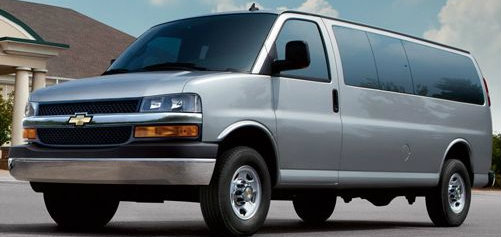
Although I am asking in the case of a van - I guess this would maybe apply even more to a pickup.
Correctly sized (and called for) LT tires - the same front and rear. I think they say TransSport or something like that on them.
Door jam sticker says 80 PSI rear and 50 PSI front. With the tires at those pressures the empty 2500 rides like a coal cart. Knock-your-teeth-out hard. Hell; slamming around like that can't even be good for the Truck. <g>
OK; so the front tires are good at 50 PSI so the rear tires must be OK at 50 PSI as well. But how low below 50 PSI would still be OK for the tires? Could they be 35 PSI and still be OK?
Any ideas? Opinions?
Correctly sized (and called for) LT tires - the same front and rear. I think they say TransSport or something like that on them.
Door jam sticker says 80 PSI rear and 50 PSI front. With the tires at those pressures the empty 2500 rides like a coal cart. Knock-your-teeth-out hard. Hell; slamming around like that can't even be good for the Truck. <g>
OK; so the front tires are good at 50 PSI so the rear tires must be OK at 50 PSI as well. But how low below 50 PSI would still be OK for the tires? Could they be 35 PSI and still be OK?
Any ideas? Opinions?



CF Pro Member


Joined: Dec 2019
Posts: 623
Likes: 177
Be a little careful. Going to lower pressure will give you more traction in the rear as well throwing off the balance, and making a rollover more likely. That's a hard thing to just test for without a few spare vans. Also if you have TPMS I think lower than 70 in the rear will set off the warning. I'd however say empty having the front and rear the same pressure might be an ok balance. I've done about 5-7 psi lower in the rear on a truck that was in no danger of rolling over with different size wheels and tires from factory. Balance was verified in empty parking lots and autocross.

CF Junior Member
Joined: Jun 2025
Posts: 42
Likes: 37
Be a little careful. Going to lower pressure will give you more traction in the rear as well throwing off the balance, and making a rollover more likely. That's a hard thing to just test for without a few spare vans. Also if you have TPMS I think lower than 70 in the rear will set off the warning. I'd however say empty having the front and rear the same pressure might be an ok balance. I've done about 5-7 psi lower in the rear on a truck that was in no danger of rolling over with different size wheels and tires from factory. Balance was verified in empty parking lots and autocross.
Unloaded, the vans are pretty close to 50/50 front-rear so I assume 50 psi would be fine in the back for an unloaded van, if you can ignore the TPMS warnings (they drive me crazy.)
Thread Starter
CF Junior Member
Joined: Oct 2025
Posts: 48
Likes: 15
I have heard (seen) that there are some kind of widgets which trick the TPMS warning system into not displaying the low warnings but I don't know how it works.
My kids definitely complain about the bumpy ride back there. I think my TPMS warning comes on at about 65psi for the rear, and I usually run at about 70psi unless I'm towing, although I'm not even sure it makes a difference at all. I don't notice a difference in the front, anyway.
Unloaded, the vans are pretty close to 50/50 front-rear so I assume 50 psi would be fine in the back for an unloaded van, if you can ignore the TPMS warnings (they drive me crazy.)
Unloaded, the vans are pretty close to 50/50 front-rear so I assume 50 psi would be fine in the back for an unloaded van, if you can ignore the TPMS warnings (they drive me crazy.)
CF Junior Member
Joined: Jun 2025
Posts: 42
Likes: 37
TBH I like the safety factor of the TPMS. If there is a way to reprogram it to warn at a lower pressure, say 45psi, then I might do that - but I'm not keen on disabling it entirely. If I have a leak in a tire, then the warning light is welcome.

CF Junior Member
Joined: Jul 2020
Posts: 34
Likes: 11
From: Preston Idaho
Find the load-inflation table for your tires which show the maximum load for a given inflation pressure. Many manufacturers will have their own but they are pretty standard. You need the correct inflation pressure for the load they're carrying.
Trending Topics
Thread Starter
CF Junior Member
Joined: Oct 2025
Posts: 48
Likes: 15
Thanks for the tip.
While looking I cam across this inflation vs fuel cost calculator: https://tirepressure.org/gas-savings-calculator
I don't how accurate it is but it says that an underinflation of 10 psi results in an addtional fuel cost of $133. per 1000 miles driven. That was at $3.00 per gallon and 15 mpg.
While looking I cam across this inflation vs fuel cost calculator: https://tirepressure.org/gas-savings-calculator
I don't how accurate it is but it says that an underinflation of 10 psi results in an addtional fuel cost of $133. per 1000 miles driven. That was at $3.00 per gallon and 15 mpg.
Thread Starter
CF Junior Member
Joined: Oct 2025
Posts: 48
Likes: 15
I do like it but somehow or other I survived nicely without TPMS for at least 50 years. <g> It does save me from the women in my life running a $350-$500. tire so flat that the wheels is scraping before they offhandedly mention 'I think something's wrong with the car'. <g>
Especially annoying because I can tell when a tire is low at about 2-3 lb. less than the others.
Actually; what I would like the most is a vehicle without Anything to help me. Manual everything and no electronics other than the fuel injection computer. Come to think on it - I imagine that is what Heaven must be like after a while. <g>
Especially annoying because I can tell when a tire is low at about 2-3 lb. less than the others.
Actually; what I would like the most is a vehicle without Anything to help me. Manual everything and no electronics other than the fuel injection computer. Come to think on it - I imagine that is what Heaven must be like after a while. <g>

CF Active Member
Joined: Jun 2022
Posts: 190
Likes: 85
From: Pensacola FL
Thanks for the tip.
While looking I cam across this inflation vs fuel cost calculator: https://tirepressure.org/gas-savings-calculator
I don't how accurate it is but it says that an underinflation of 10 psi results in an addtional fuel cost of $133. per 1000 miles driven. That was at $3.00 per gallon and 15 mpg.
While looking I cam across this inflation vs fuel cost calculator: https://tirepressure.org/gas-savings-calculator
I don't how accurate it is but it says that an underinflation of 10 psi results in an addtional fuel cost of $133. per 1000 miles driven. That was at $3.00 per gallon and 15 mpg.

