


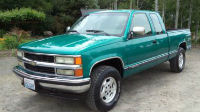
88 Cheyenne k1500 4.3L no start no scan



CF Veteran

Joined: May 2011
Posts: 1,578
Likes: 302
From: Central Iowa

The check valve is integral to the fuel pump - on an 88 you can replace just the pump without also replacing the sending unit & hanger assembly, but typically the connections at the pump are so corroded they don’t come loose without bending or breaking.
The lines on the frame are also usually in bad shape - repair kits or complete lines are available for them (Dorman is one manufacturer but there’s also stainless steel if you want to avoid corrosion issues in the future) depending on your comfort level.
If you haven’t had the tank out before I’d recommend planning on replacing the pump, sending unit and hanger. But that’s because I live in the rust belt and every time I drop one of these tanks that’s what has to be done. If you live in an area where rust isn’t much problem you may be OK.
The line connections can be sprayed with penetrating oil from the left rear fender well, if you want to soak them down ahead of time.
The lines on the frame are also usually in bad shape - repair kits or complete lines are available for them (Dorman is one manufacturer but there’s also stainless steel if you want to avoid corrosion issues in the future) depending on your comfort level.
If you haven’t had the tank out before I’d recommend planning on replacing the pump, sending unit and hanger. But that’s because I live in the rust belt and every time I drop one of these tanks that’s what has to be done. If you live in an area where rust isn’t much problem you may be OK.
The line connections can be sprayed with penetrating oil from the left rear fender well, if you want to soak them down ahead of time.



CF Veteran
Joined: May 2011
Posts: 1,578
Likes: 302
From: Central Iowa
Yeah bent nipples are rarely helpful. 
In addition to making sure it’s indexed correctly, use a bit of grease (chassis, lithium or dielectric) or petroleum jelly on the o-rings - makes seating them much easier and will prevent them from rolling or getting cut.
Also if you removed the fuel line fittings from the injector body, be very careful not to over tighten them when reinstalling. Take them down just past snug and that’s good enough.
A couple of years ago I was servicing the injector body on a customer truck and I got a little carried away tightening up the fittings and ended up breaking a large chunk of the casting off the return side.
To my relief, I was able to locate one through GM. At the time they told me it appeared to be the last NOS one in the country. Thanks to me, now everyone in need of one has to scrounge the salvage yards.
In addition to making sure it’s indexed correctly, use a bit of grease (chassis, lithium or dielectric) or petroleum jelly on the o-rings - makes seating them much easier and will prevent them from rolling or getting cut.
Also if you removed the fuel line fittings from the injector body, be very careful not to over tighten them when reinstalling. Take them down just past snug and that’s good enough.
A couple of years ago I was servicing the injector body on a customer truck and I got a little carried away tightening up the fittings and ended up breaking a large chunk of the casting off the return side.
To my relief, I was able to locate one through GM. At the time they told me it appeared to be the last NOS one in the country. Thanks to me, now everyone in need of one has to scrounge the salvage yards.
CF Veteran
Joined: May 2011
Posts: 1,578
Likes: 302
From: Central Iowa
I’d have to get one apart again to be sure but IIRC it’s a return passage. Fuel is used to help keep the injectors cool and so it has to be circulated into the injector shell and around the solenoid coil housing. Not much different than the oil filled ignition coils, but with a constant flow to act as coolant instead of relying on just radiant transfer.